
Tourism system roles
This information outlines how roles and responsibilities are shared across the tourism system, and how central government, local government and industry work together.
On this page I tēnei whārangi
How these roles fit together
The table below sets out the intended division of accountabilities going forward, to guide coordination and accountability rather than describe current practice in every location. It reflects a deliberate shift toward clearer industry leadership in areas where outcomes depend primarily on commercial behaviour, operational standards and sector-wide norms, with central government focused on enabling system settings and cross-system coordination.
Key
Lead: Accountable for driving action and convening others.
Partner: Jointly designs/delivers, shares responsibility for outcomes.
Enable: Provides settings, tools, funding, guidance, or data that make delivery possible
| Cross-cutting system issue | Central government | Local government | Industry | Comment |
|---|---|---|---|---|
| Policy, system settings and strategic direction | Lead | Enable | Partner | Central government leads the broader economic strategy, setting overall direction and priorities for the tourism system. Government ensures the tourism system operates effectively to support outcomes for New Zealand and New Zealanders, including, as appropriate, enabling industry strategy. |
| Tourism industry strategy | Enable | Enable | Lead | Industry leads industry strategy, reflecting sector aspirations and how tourism businesses and organisations will contribute to economic, social, community and environmental outcomes. Local government shapes and delivers destination priorities. |
| Tourism funding | Lead | Partner | Partner | Central government receives revenue from tourism activity and determines the deployment of funds for tourism-related programmes and initiatives. Local government chooses to invest some rates funding into tourism-related programmes and initiatives. |
| Domestic marketing | Enable | Lead | Partner | Marketing to New Zealanders to travel and attend events within New Zealand is undertaken by both local government (RTOs) and tourism businesses. |
| International marketing | Lead | Partner | Partner | Tourism New Zealand is the national tourism marketing agency. This is supported and leveraged by businesses and regions that market internationally. |
| Place-based planning and destination management | Enable | Lead | Partner | Management of place is an important tourism function that considers the needs for sector growth alongside community need and environmental impacts. |
| Management of public infrastructure | Lead | Enable | Partner | Central government plans and invests in infrastructure that is a function of central government (eg major roads, DOC assets). |
| Management of local infrastructure | Enable | Lead | Partner | Local government plans and invests in infrastructure that is a function of local government and primarily intended to deliver broader community outcomes (eg amenities, venues, local roads, waters, parks, seaports, airports). |
| Product development | Enable | Enable | Lead | Tourism businesses lead the development of commercial products and services for visitors that are both primarily commercial in purpose and supported by private investment or business revenue. Central and local government enable this activity through planning, infrastructure and investment settings. |
| Education and skills qualification delivery | Lead | Partner | Partner | Central government provides the educational and vocational skill qualifications (secondary school, vocational and tertiary education) required by the tourism, hospitality and events sectors. |
| Workforce capability and development | Enable | Enable | Lead | Industry has a direct interest in attracting, retaining and upskilling its workforce. This includes recruitment, on-the-job training, career progression, skills development, and engagement in both the development and use of government-provided programmes. |
| Data and insights | Lead | Partner | Partner | Data and insights for the tourism sector are largely led by central government. The availability of different data and the impact of new technologies are providing new opportunities that need consideration in a coordinated system. |
| Industry intelligence and early warning | Partner | Partner | Lead | The industry is sensitive to market forces, capability challenges and other risks and is best placed to assess situations and respond. However, it is often reliant on government data and intelligence to inform this work. |
| International connectivity | Enable | Enable | Lead | International aviation and cruise connectivity is largely dependent on private sector businesses but relies on infrastructure that is enabled by central and local government. |
| Business sustainability and emissions transition | Enable | Enable | Lead | The industry leads sustainability initiatives in the sector and businesses participate in sustainability programmes. |
Policy actions: System roles and coordination
- Set clear leadership and accountability across the system. This Statement clarifies the respective responsibilities of central government, local government and industry in responding to tourism growth pressures, including how decisions and accountabilities interact.
- Strengthen cross-agency coordination within central government. Government will coordinate between relevant agencies, where appropriate, to identify risks early, align policy and investment decisions, and avoid duplication. Government will also ensure agencies understand and take account of this Statement, and recognise tourism’s role as a major employer, driver of regional growth, and contributor to New Zealand’s GDP and export earnings. These will include ministries, departments and agencies responsible for tourism and hospitality; border management; economic growth, trade and investment; education, skills and training; immigration and employment; Māori development; conservation; culture, heritage and sport; and our environment, cities, regions, transport and infrastructure.
- Consider options to strengthen the tourism system. Government will assess whether current system leadership, coordination and delivery arrangements remain fit for purpose over the long term, and consider options to strengthen them including, where appropriate, the case for new or updated institutional arrangements and/or enabling legislation.
- Consider policy options for a national destination plan. Government will consider options for a national destination plan which sets a shared long-term vision and strategic priorities for tourism, with clear targets, measures and reporting expectations. The plan would contribute to economy-wide outcomes, support alignment of national, regional and local objectives, and provide a holistic framework to guide coordinated decision-making, sequence growth and investment, and manage system-wide trade-offs over time.
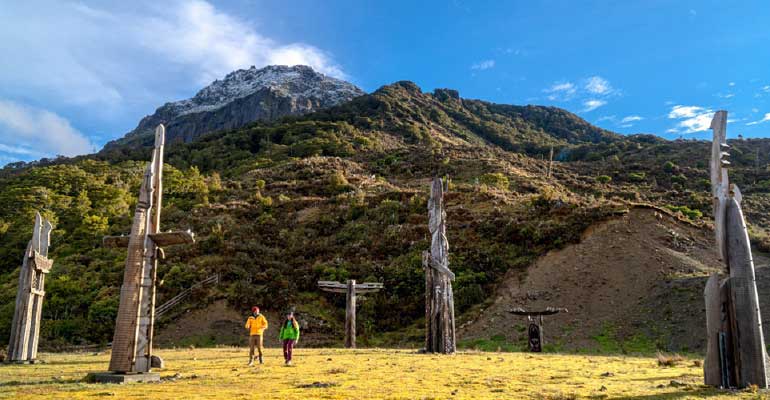
Mount Hikurangi, Gisborne. Photo credit: Eric Hanson.