
Core system roles
The roles below are intended to guide future behaviour and decision-making, including clearer accountability when trade-offs arise.
On this page I tēnei whārangi
Central government
Central government:
- sets the overall strategic direction and priorities for the tourism system
- establishes regulatory and funding frameworks, and determines the deployment of funding for tourism-related programmes and initiatives
- plans and invests in infrastructure that is a function of central government such as roads and Department of Conservation assets
- leads international destination marketing through Tourism New Zealand
- provides education and vocational skills qualifications, and
- supports the attraction of major events and international conferences.
Government has a role in ensuring tourism policy both aligns with and is supported by broader policy objectives including the economy and employment, international trade and investment, border management, infrastructure, conservation, climate, Māori development, and culture. The dispersed levers shaping outcomes in tourism necessitate ongoing coordination across government and between portfolios.
These efforts are also central to maintaining public confidence in how tourism is governed, and how central government can intervene when there are clear market failures or where there are system-wide risks or coordination gaps that individual entities cannot resolve alone. Interventions may also occur where economies of scale or other efficiencies mean outcomes are best achieved through centralised action.
An example of this role in action is central government’s leadership of international destination marketing. Through the mandate, expectations and funding provided to Tourism New Zealand, the government ensures New Zealand has a strong global tourism brand to attract international visitors and aligns marketing activity with system outcomes such as dispersal, seasonality and capacity. This centralised destination marketing activity complements the conversion-focused international marketing activity of our large tourism businesses including airlines, cruise operators and hotels.
Another example is central government supporting attraction of major national events and/or coordinating and planning such events, which might require involvement of multiple government agencies (such as border agencies and Police) and local government.
Note on Department of Conservation
New Zealand’s natural environment – a third of which is under the stewardship of the Department of Conservation (DOC) – is a key foundation of our tourism proposition. DOC is a critical actor in the tourism system with lead accountabilities across the central government, local government and industry spheres outlined in the table on pages 16 to 18. It has wide-ranging responsibilities across public conservation land and waters for ecological stewardship, place-based planning, visitor infrastructure and facilities, visitor products, and managing visitor pressures.
A key part of DOC’s role is administering tourism concessions on the conservation estate: setting conditions that enable access and high-quality experiences while protecting natural and cultural values.
DOC is also an integral part of industry, developing and delivering nature- and heritage-based tourism products and experiences. DOC delivers these outcomes working in partnership with mana whenua/Treaty partners, local government, community groups, Regional Tourism Organisations (RTOs) and concessionaires, aligning stewardship with access, investment and visitor experience.
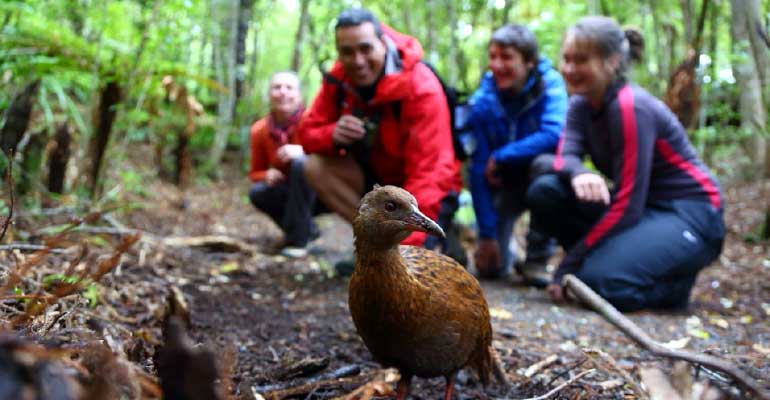
Ulva Island, Southland. Photo credit: DOC/Great South.
Local government
Local government’s role in placemaking is essential. Events, museums and galleries, public spaces and visitor infrastructure are foundational to tourism.
Local government:
-
provides core services such as network infrastructure, public transport, museums, venues and other facilities that are intended to deliver broader community outcomes
-
leads place-based planning, destination management, events development and acquisition, and engagement with local communities
-
leads domestic destination marketing, and
-
owns or invests in tourism facilities like airports, stadiums, galleries, and convention centres.
Local government’s overall purpose includes meeting community needs for good-quality local infrastructure and public services and, in doing so, supporting local economic growth and development. Councils address local tourism needs while balancing other local responsibilities and expectations.
The tourism system benefits particularly from local government’s priority focus on providing core services such as network infrastructure, public transport, museums, reserves and other facilities. The other important roles it leads include place-based planning, destination management, events development and acquisition, and engagement with local communities. Councils are often closest to the impacts of tourism growth, and they are central to shaping how tourism contributes to local outcomes through placemaking.
In many regions, councils provide funding to RTOs. RTOs are an important part of the tourism system and a critical delivery mechanism at a destination level. They translate strategy into on-the-ground action by coordinating visitor servicing, experience and itinerary development, destination management activity, and regional promotion. RTOs help align the demand and supply sides of the system, strengthen destination propositions, and ensure what is promoted can be credibly delivered by a region.
Local government also plays a leading role in domestic destination marketing of place and events.
Local government is also a major owner of, or investor in, tourism-connected activities, amenities and infrastructure which are highly reliant on the visitor economy. These include zoos, stadiums, event venues, art galleries, airports and convention centres, among others.
Under the City and Regional Deals initiative, the Government is establishing long-term agreements between central and local government. The deals will unlock funding and resource opportunities to support councils to make improvements in their respective regions. The types of opportunities included in City and Regional Deals will enable local government partners to continue supporting tourism growth, including through events.
Industry
Industry:
- leads industry strategy
- invests in and develops commercial products and services for visitors including accommodation, hospitality, and tourism-enabling infrastructure (such as visitor accommodation, attractions and activity facilities)
- attracts, retains and upskills its workforce, and
- leads sustainability initiatives in the sector.
Industry is principally responsible for delivering high-quality visitor experiences and responding to changing market conditions or visitor preferences.
Industry associations are key entities within the tourism system. They are important delivery partners for lifting standards and supporting uptake of new approaches within their memberships. Associations also provide advocacy, business intelligence, practical tools and resources, and business capability and training support to help firms adapt and improve performance.
In addition to commercial delivery, industry has lead accountability (often through industry associations and other networks) for several system-critical functions that shape long-term outcomes, including:
- setting and lifting service quality, accessibility and customer experience standards, including through voluntary accreditation, peer learning and continuous improvement
- leading the development of workforce skills priorities and retention initiatives that support a productive, resilient sector
- embedding responsible visitor behaviour across the visitor journey, working with mana whenua and destination partners to reinforce shared expectations (for example through initiatives such as the Tiaki Promise)
- driving the adoption of rapidly emerging technologies, such as artificial intelligence (AI), to leverage their full potential for growth and business productivity gains
- leading the transition to more sustainable and lower-emissions operations, including the adoption of practical, scalable approaches that protect long-term value, and
- providing system intelligence and early warning by aggregating on-the-ground insights on demand conditions, capacity constraints and emerging risks to support timely, proportionate system responses.
Tourism businesses create and market the experiences visitors can buy. They develop market-ready products that build regional propositions, and use pricing, packaging, influence and distribution channels to shape demand. Destination marketing then builds awareness and preference for New Zealand and its regions, while industry-led activity converts that interest into sales through trade, retail and booking channels.
Iwi, hapū and Māori businesses play a distinctive and leading role in expressing culture, kaitiakitanga and place-based identity, and in shaping visitor experiences that authentically reflect Māori values and aspirations.
Transport businesses operating across the aviation, maritime and land transport sectors – airlines, airports, ferries, cruise and port operators, and rental, bus and shuttle businesses – play a key enabling role in international and regional connectivity, visitor flows and system resilience.