
Introduction and purpose
Describes why New Zealand needs a Tourism Policy Statement and what it will do.
On this page I tēnei whārangi
Tourism that strengthens New Zealand
Tourism and hospitality play a critical role in strengthening and growing the New Zealand economy. At the time of this Statement’s publication, tourism is New Zealand’s second-largest export earner and provides significant employment with one in nine people being employed in the industry.
Tourism boosts our regional economies, provides great experiences for New Zealanders and international visitors, and showcases the best aspects of New Zealand to the world. Tourism is foundational to building New Zealand’s international brand, reputation, relationships, wider trade and investment outcomes and visitor experiences.
Visitor spending helps sustain venues, attractions and activities that visitors and New Zealanders both utilise. In this way, tourism provides tangible benefits to residents and visitors alike by supporting businesses and facilities that might not otherwise be viable.
Whether it is New Zealand’s landscapes, our authentic hospitality, or our world‑class experiences, the continued growth in visitor numbers and spending underscores tourism’s role in achieving our wider economic objectives.
Growth that protects New Zealand’s brand and competitive edge
The Government’s Tourism Growth Roadmap sets an ambitious goal of doubling the 2023 value of tourism exports by 2034. In order to do this, we need to create the conditions for sustainable growth and to ensure the tourism system is set up to support this growth in the long term.
For New Zealand, stewarding tourism growth is an opportunity to protect and strengthen our international competitiveness as a destination and the integrity of the brand we take to the world. New Zealand is widely regarded internationally as a safe and welcoming country. Maintaining this reputation is central to our appeal and our competitiveness.
Since we are distant from many markets, we must also consider how well our system settings enable New Zealand to compete with other destinations to secure air and cruise links.
Sustainable growth means ensuring visitation matches regional destination capacity, backed by investment in infrastructure, housing, services and workforce capability. It also means protecting the natural and cultural assets that make New Zealand distinctive – our iconic landscapes and heritage sites, Māoritanga, museums, galleries and festivals. It is essential that what we promote internationally is consistently delivered on the ground. This requires us to protect and continually improve our high‑quality visitor experience. We must also maintain community confidence and align decisions across the system so tourism can continue to grow and deliver value to both New Zealanders and visitors alike.
Shared direction, clear expectations, coordinated delivery
This Tourism Policy Statement (the Statement) sets out what the Government seeks to achieve for tourism and how it plans to get there over the next decade. It clarifies priorities, principles and roles for consistent decision-making across the tourism system.
Delivering on this shared direction will require a New Zealand Inc approach – aligning central government agencies, local government, industry, mana whenua and communities around shared outcomes and coordinated delivery.
This Statement sets out eight policy objectives and the key policy actions needed to support them. These actions are not the sum total of government work in tourism going forward. The Statement does not pre-commit any additional funding.
This Statement builds on the Tourism Growth Roadmap and the long-term ambition articulated by the tourism industry in Tourism 2050 – A Blueprint for Impact, as well as other key industry publications and government strategies.
Accordingly, this Statement focuses on the decisions and trade-offs shaping outcomes, and the settings required for tourism to succeed and maintain confidence over time.
Tourism is the whole visitor economy
In this Statement, tourism is understood as the whole visitor economy. For clarity and continuity, this Statement uses the term ‘tourism’. However, it deliberately adopts a visitor economy perspective to guide outcomes.
The visitor economy recognises the full contribution all visitors – international and domestic – make to New Zealand and the value they create across hospitality and accommodation, attractions and activities, events, transport, retail, and placemaking. Together, tourism activities support jobs, attract investment and trade, support regional prosperity, as well as contribute to vibrant towns, cultural expression, and community wellbeing.
This perspective reflects tourism as a system shaped by the combined actions of industry, central government, local government, mana whenua and communities, with each playing a role in delivering high-quality visitor experiences alongside enduring benefits for communities
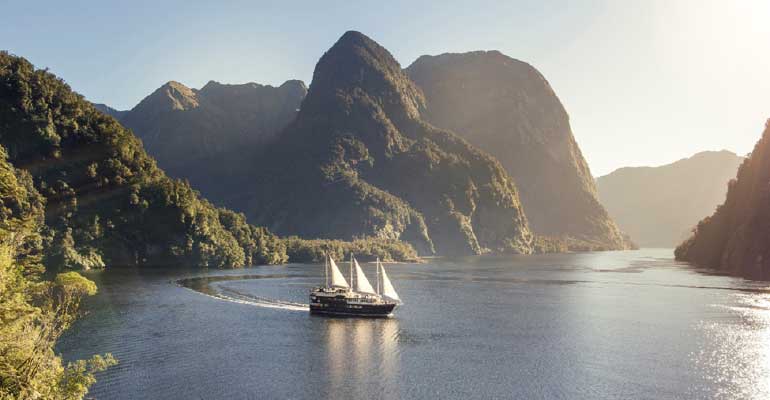
Doubtful Sound, Southland. Photo credit: Miles Holden.