
Illustrating the system in practice
Practical examples to show how the tourism system operates in different contexts, including sectors, markets and places.
On this page I tēnei whārangi
Subsector vignette: Cruise tourism
Cruise tourism highlights the importance of system coordination: high demand alone does not deliver strong economic outcomes without effective alignment across government, industry and the wider tourism system. While global cruise tourism continues to grow, New Zealand has recently experienced a persistent decline in cruise visitors and port calls. In the 2025/26 season, New Zealand cruise visitation is just over half the pre-pandemic level. Cruise lines make deployment decisions years in advance and confidence in New Zealand’s settings is critical to whether we remain globally competitive.
Predictable settings that lift value
What success looks like
- Cruise delivers measurable net value to New Zealand across the economy, environment, communities, businesses and visitor outcomes.
- Time in port is used well, lifting spend on local food, beverage, retail, transport and experiences.
- Communities retain confidence that cruise visitation is well managed.
How the system operates
- Central government shapes commercial decisions through border processing, biosecurity requirements, maritime and border charges, and conservation-related permits.
- Local government and port authorities manage the onshore interface and commercial agreements, including transport, amenity, waste and public facilities.
- Cruise industry responds to cost certainty, scheduling flexibility and the availability of high-quality shore experiences.
Central government’s role
- Strengthen cross-government coordination on settings that affect cruise deployment decisions.
- Improve transparency and predictability of charges and compliance requirements.
- Invest in practical enablers that lift value, including port readiness, shore infrastructure and better data on regional spend.
When settings are transparent and predictable, and impacts are well managed, cruise can support regional and seasonal dispersal and regional value while maintaining community confidence.
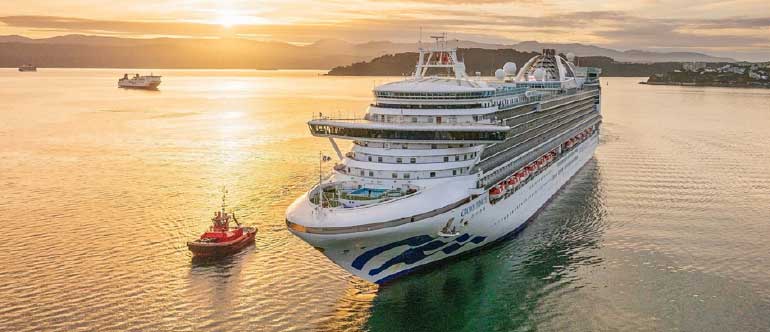
Crown Princess, CentrePort Wellington harbour. Photo credit: David Jensen
System vignette: Domestic tourism
Domestic tourism is often overlooked as a background market but plays a distinct and foundational role in the tourism system. Domestic visitation is essential for the wider tourism economy and keeps many regional destinations viable. For many tourism businesses, domestic visitation comprises most of their trade. For the year ended March 2025, domestic tourism expenditure accounted for 61 per cent of total tourism expenditure. It provides a large base of steady demand, less exposed to international shocks, helping businesses, workforces and supply chains remain viable through downturns. A primary lever for domestic tourism is events, incentivising locals to travel within New Zealand.
Domestic travellers also help businesses test new products and itineraries. This helps operators refine quality before scaling to international markets. Because domestic travel tends to be habitual and is more likely to occur across weekends, school holidays and short breaks, it can also be deliberately shaped to support regional and shoulder-season dispersal – particularly when pricing, event calendars and transport connections are aligned.
Stabilising the system and supporting regional economies
What success looks like
- Tourism businesses have stable, year-round demand, supporting retention of skilled staff and higher service quality.
- Domestic travel supports regional prosperity by growing demand in a wider range of places and distributing spend beyond the main gateways.
- Domestic travellers have opportunities for enriching experiences, such as sports, festivals and cultural events, including the arts, sports, food and beverage, and Māori culture.
- Seasonality pressures are reduced through aligned event programming, targeted offers and improved access in shoulder periods.
How the system operates
- Events, sports and culture are key drivers of domestic tourism and are effective tools to encourage regional and seasonal dispersal. For example, food and wine festivals, concerts and sports fixtures spread through the year offer local economic benefits.
- Industry uses domestic demand to trial new formats (micro-events, themed weekends, new guided products), de-risking investment and improving experience design before international expansion.
- Regional partners and local government shape dispersal by developing place-based propositions and event calendars, improving local wayfinding and visitor services, and supporting access to nature and amenity in peak and shoulder periods.
- Central government/Local government can support events and product innovation providing reasons to travel in off-peak periods (including community events that strengthen social licence and place pride).
- Central government (through DOC) coordinates access and visitor facilities on public conservation land (eg tracks, huts, campgrounds and holiday parks) with regional partners.
- Transport and accommodation settings influence whether domestic travel supports dispersal. Pricing, availability and booking friction shape short-break travel patterns and the viability of shoulder-season offers. Aviation, maritime and ground transport settings are a key part of this, including air and maritime capacity, frequency and fares on trunk and regional routes, and coordination between industry and destinations to support shoulder-period travel.
Key challenges
- Domestic travel is highly price-sensitive (cost of living, transport and accommodation pricing), which can reduce demand quickly and limit affordability for families.
- Demand concentrates around weekends, school holidays and peak seasons, creating congestion, workforce pressures and reducing the ability to smooth visitation across shoulder periods.
- Where campaign timing, capacity, product depth and events programming are not aligned, opportunities to smooth demand and support shoulder-season travel are limited. Gaps in data on domestic flows and impacts further constrain effective decision-making.
Domestic tourism is not only a market segment; it is a system stabiliser and an innovation pathway that can be intentionally shaped to support regional vitality and year-round visitation.
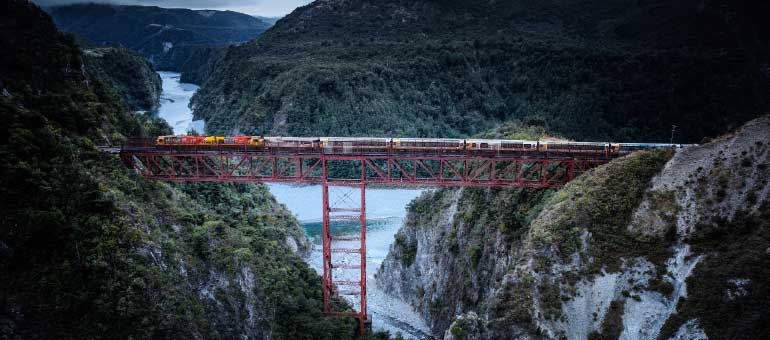
Tranz Alpine, Crossing Staircase Viaduct, Canterbury. Photo credit: Great Journeys
Place vignette: Aoraki/Mt Cook
Aoraki/Mt Cook is one of New Zealand’s most iconic landscapes and is a Māori tīpuna of deep cultural significance to mana whenua. It attracts high visitor interest and carries strong expectations around environmental integrity, cultural connection, safety and experience quality. At peak times, pressures can concentrate quickly on carparks and roads, visitor facilities, walking tracks, cycle trails and staff capacity. In places like this, long-term value depends less on stimulating demand and more on how well visitation is managed.
Protecting value through disciplined visitor management
What success looks like
- Visitors experience Aoraki/Mt Cook as a world-class, well-managed place.
- Environmental and cultural values are protected alongside access and enjoyment.
- Visitor pressures are anticipated and addressed before they undermine experience or confidence.
How the system operates
- DOC has a core stewardship role and is progressing destination management alongside local government and mana whenua at our highest value and most visited sites on public conservation land, including Aoraki/Mt Cook.
- DOC, local government and mana whenua shape the wider place experience through planning, services and community engagement.
- Industry influences how visitors move through the place, the experiences they choose, and the standards of behaviour that are normalised.
Central government’s role
- Supports clear visitor settings (for example, access rules, parking management, capacity limits and where appropriate, booking or time-slot systems) that manage peak pressures and protect values.
- Ensures core tourism-enabling infrastructure (including access roads, parking and essential utilities) is fit for purpose to handle expected visitation.
- Enables coordinated decision-making across agencies, rather than fragmented responses.
- Reinforces shared stewardship expectations that protect what makes the place distinctive.
This vignette illustrates this Statement’s intent in practice: growth that is better shaped, better supported and more likely to endure.

Hooker Valley Track, Aoraki/Mount Cook National Park. Photo credit: Miles Holden