
Renewables
New Zealand’s renewable energy supply reached a record high in 2025, driven by strong growth in geothermal and solar energy. Combined with decreases in non-renewable energy supply, the share of renewable sources in both total primary energy supply and electricity generated rose to new highs.
On this page I tēnei whārangi
Background
New Zealand uses renewable energy sources for electricity generation and direct use.
Electricity generation
New Zealand’s renewable resources are primarily used to generate electricity in New Zealand:
- Hydro is used to generate electricity, with hydroelectric plants distributed across both islands. The largest plants, in terms of capacity, are found in the South Island.
- Wind is also used to generate electricity, with the largest wind farms found in the North Island.
- New Zealand’s geothermal resources are almost exclusively concentrated in the central North Island, within the Taupō Volcanic Zone. There is also a geothermal field in Northland at Ngāwhā. Electricity generation plants in these locations run as baseload, meaning that they are unable to quickly adjust their generation output.
- Solar is a newer source of renewable electricity generation in New Zealand. Historically, this has been in the form of ‘distributed’ installations such as on-site generation or use by households and businesses. Recent years have seen large ‘utility-scale’ solar farms coming online with some of these connected to the national electricity grid.
Direct use
Renewable energy can also be used for a range of other applications:
- Geothermal is used directly in industrial processes (such as drying milk powder or timber), heating greenhouses, and for residential and commercial heating. Kawerau, where geothermal steam is a significant source of energy for pulp and paper mills located there, is one of the largest locations in the world for direct use of geothermal heat.
- Solid biofuels refer to woody biomass, black liquor, charcoal, and firewood.
- Many pulp and paper mills and wood processors use by-products, such as wood residuals and black liquor, on-site to generate heat for their processes.
- Black liquor is a by-product of the wood pulping process, containing lignin, wood fibres, and chemicals. It is combusted in boilers in pulp mills and is considered to be a solid biofuel.
- Households use smaller amounts of charcoal and firewood.
- Liquid biofuels are renewable, low emission fuels that can be used in place of existing fossil fuel oil products.
- Biodiesel and bioethanol can be blended with petrol or diesel and are compatible with existing internal combustion engines and help reduce transport emissions.
- Sustainable aviation fuel (SAF) is a jet fuel made from renewable feedstocks such as vegetable oils and animal fats and is chemically similar to fossil jet fuel.
- Biogas is produced from organic waste sources like wastewater, sewage, and landfills. It consists mainly of methane and carbon dioxide and is used to generate heat and electricity.
- Sludge gas is derived from the anaerobic fermentation of biomass and solid wastes from sewage.
- Landfill gas is derived from the anaerobic fermentation of biomass and other organic solid wastes in landfills.
Renewable energy production increased in 2025
New Zealand’s renewable energy supply reached a new record in 2025, increasing from 383 PJ in 2024 to 395 PJ. Growth in renewable supply, combined with a continued decline in non-renewable use, increased New Zealand’s renewable share of total primary energy supply (TPES) to a record 47.7%, up from 45.6% in 2024.
The increase in renewable energy also contributed to the highest share of electricity generation from renewable sources since 1981, rising from 85.5% to 88.5%. At the same time, non-renewable energy supply fell to its lowest level since 1992, decreasing from 457 PJ in 2024 to 433 PJ in 2025.
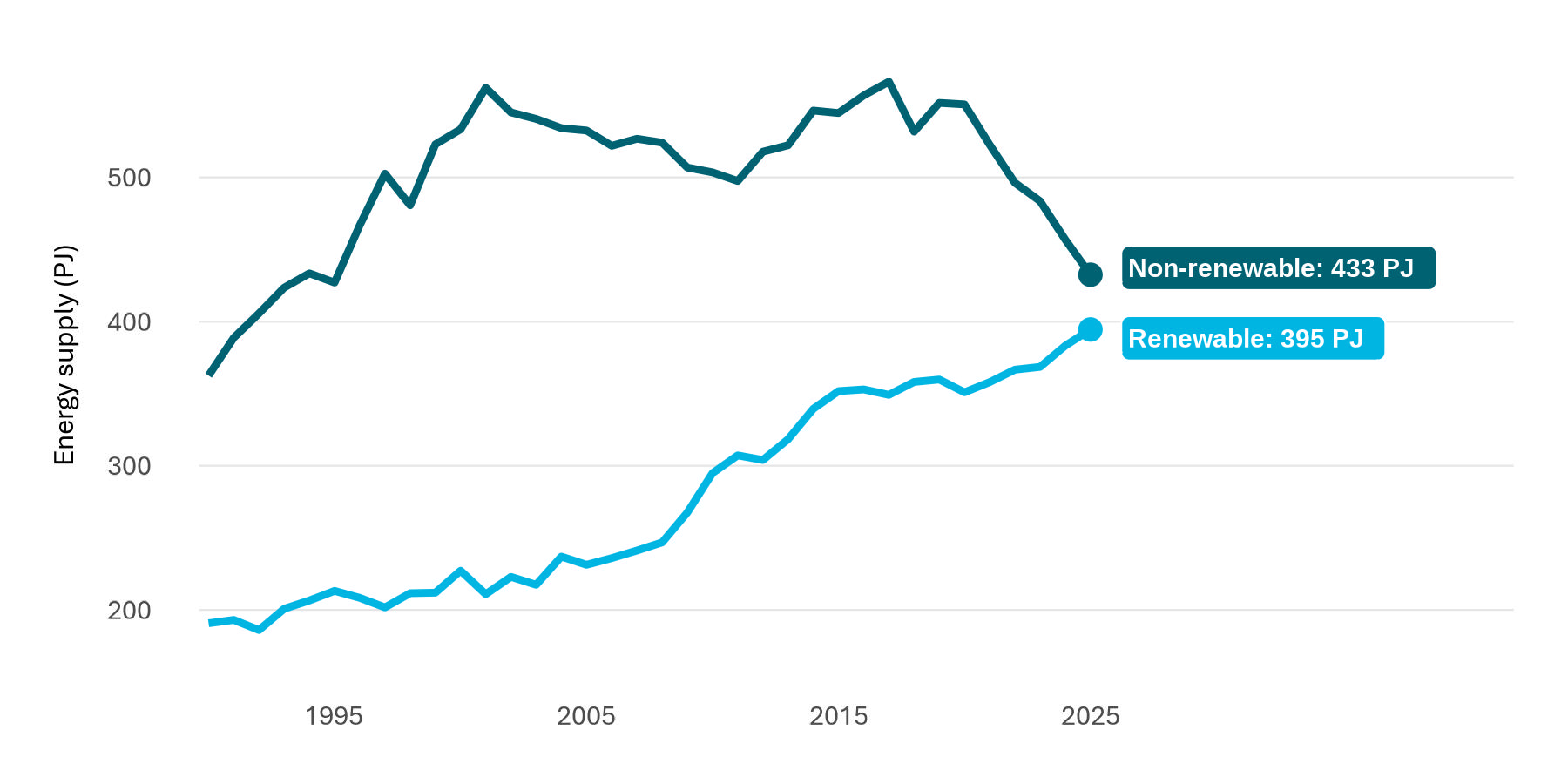
Figure C.1: Energy supply from renewable and non-renewable sources by year.
View chart data for figure C.1
Geothermal and solar energy supply both reached record highs during the year. Hydro production also rebounded from the low 2024 levels, supported by favourable hydrological conditions. While reported solid biofuel supply declined, growth in geothermal and solar more than offset this reduction, resulting in an overall rise in renewable energy supply.
31.7% of energy consumption came from renewable sources
New Zealand’s share of modern renewables in total final consumption (TFEC)10 reached a new record in 2025, increasing from 30.3% in 2024 to 31.7% in 2025. Modern renewables covers consumption of all renewable energy sources by businesses and households, including the amount of electricity use that can be attributed to renewables.
Since peaking in 2004, direct use of renewables has been declining steadily. In 2025 it dropped to 37.5 PJ, its lowest level since 2000. However, the amount of electricity consumption allocated to renewables has been increasing, and in 2025 it reached 129 PJ, its highest level on record.
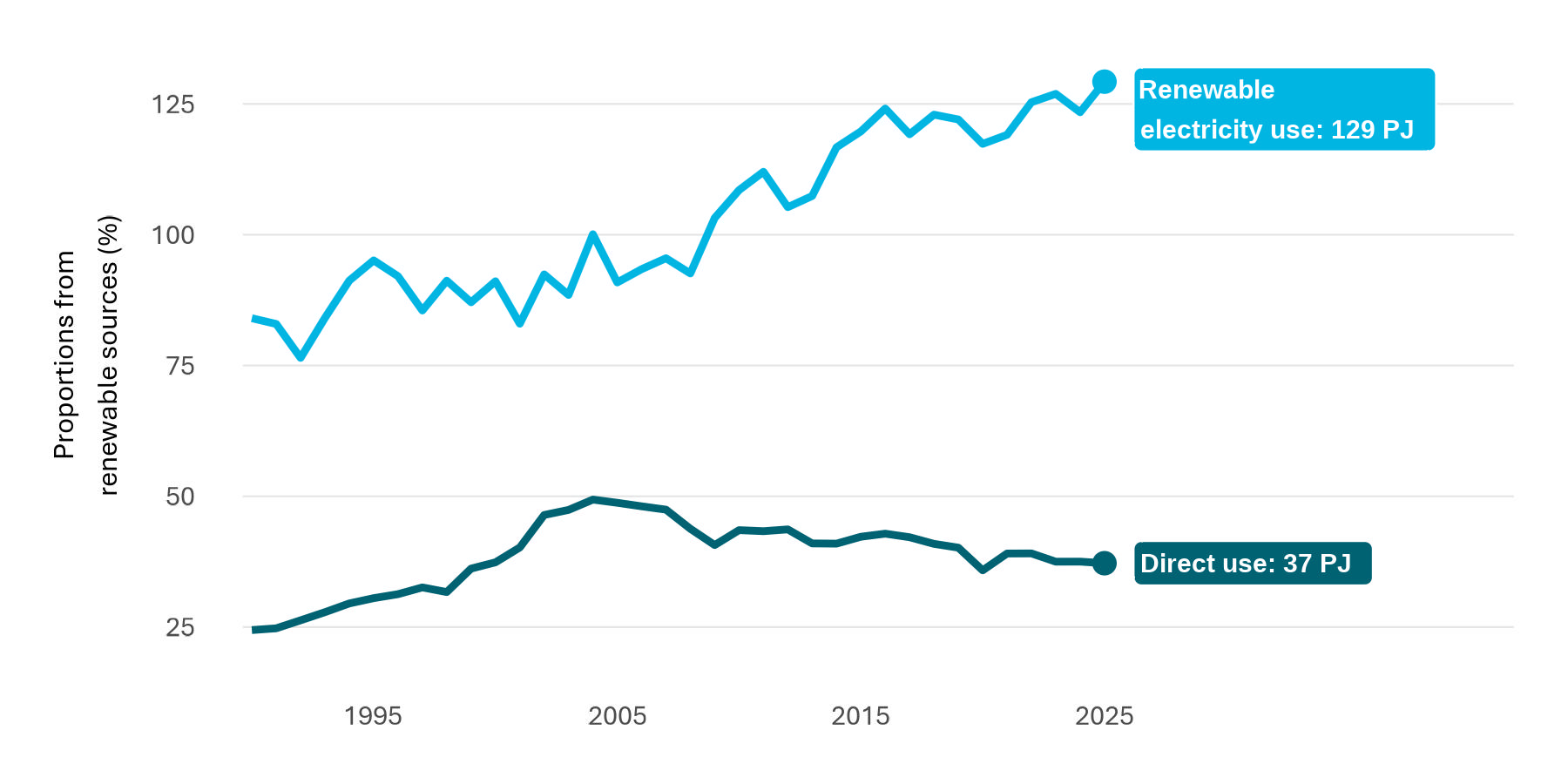
Figure C.2: Renewable energy by end-use and year.
View chart data for figure C.2
Wood Energy Strategy and Wood Energy Action Plan
In October 2025, MBIE released the Wood Energy Strategy, which supports the Government’s goal of growing New Zealand’s forestry sector by increasing the use of wood residues and processing by-products for energy. This initiative aims to boost economic growth, improve energy security, and support the development of a more sustainable and resilient wood energy industry. A Wood Energy Taskforce and Action Plan have been established to support the development of a stronger wood energy industry to drive this work forward.
As part of this work MBIE is developing a new statistical survey to improve data on how wood energy is being supplied and used in New Zealand11.
More information is available on MBIE’s website:
Government sets direction for future of bioenergy(external link)
Renewable electricity generation capacity continues to grow
Total electricity generation capacity from renewables increased from 8,781 MW in 2024 to 9,149 MW in 2025. This was a 17% increase from 2021, driven by significant growth in solar capacity.
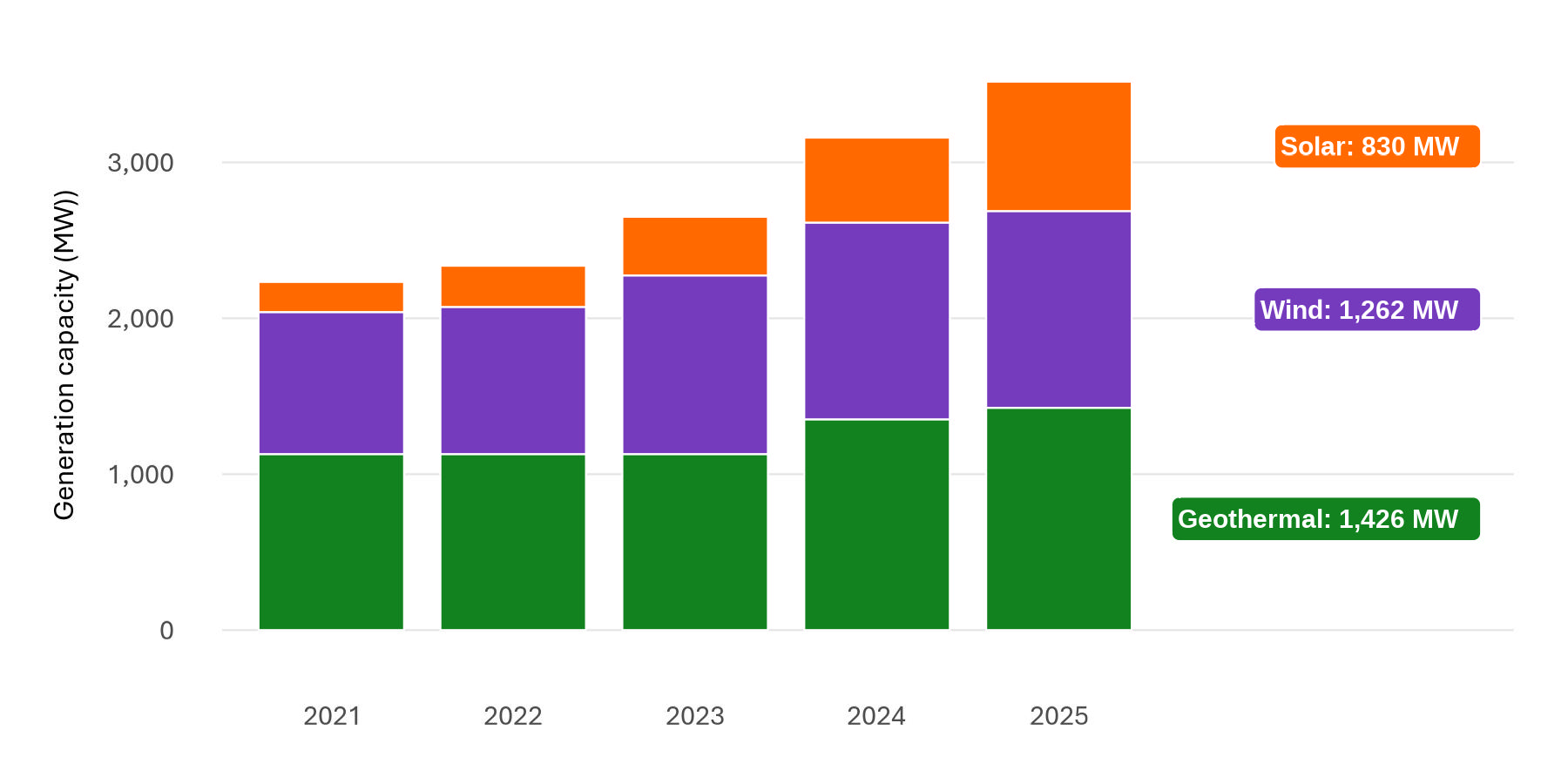
Figure C.3: Generation capacity from selected renewable sources from the past five years.
View chart data for figure C.3
In 2020, solar capacity made up 1.9% of total electricity generation capacity from renewables, which increased to 9.1% in 2025. Over the 2025 calendar year, several solar plants have come online, growing solar capacity from 545 MW to 830 MW, a 52% increase. In January 2025, Te Herenga o Te Rā became New Zealand’s first solar farm to be connected directly to Transpower’s national transmission grid, rather than through a local distribution network.
Geothermal capacity also increased with Eastland Generation’s TOPP2 power station coming online in December 2025.
Table C.1: New plant capacity from January 2025 – December 2025
| Plant Name | Type | Capacity[12] |
|---|---|---|
| Te Herenga o Te Rā | Solar | 33 MW |
| TOPP2 | Geothermal | 49 MW |
| Te Puna Mauri ō Omaru | Solar | 17 MWp13 |
| Pukenui | Solar | 21 MWp13 |
| Taiohi | Solar | 33 MWp13 |
| Pāmu Rā ki Whitianga | Solar | 33 MWp13 |
| Twin Rivers | Solar | 31 MWp13 |
| Ward | Solar | 9 MW |
The Electricity Authority’s generation investment pipeline14 shows 1,705 MW of generation capacity from committed projects, expected to come online in the next three years. 94% of this planned generation capacity comes from renewable projects, with the remaining 6% from battery energy storage system (BESS) projects. Solar projects make up over 50% of the planned generation capacity (930 MW), followed by wind (485 MW) and geothermal projects (190 MW). Renewable generation capacity is expected to grow by 647 MW over the next year as committed projects are commissioned.
Footnotes
[10] TFEC is calculated by combining the direct use of renewable energy by end-users with the renewable portion of electricity consumption and dividing this total by overall final energy consumption.
[11] Wood energy supply data is currently under review. This could mean that actual supply is higher than the estimates currently reported.
[12] Based on public announcements.
[13] MWp (megawatt peak) refers to the maximum rated capacity that can be produced under ideal test conditions.
[14] Generation investment pipeline(external link) — Electricity Authority