
Oil
While domestic production of oil and LPG continues to decrease, the volume of oil consumed in New Zealand in 2025 stayed relatively steady. Despite geopolitical events in the Middle East, prices remained stable over the course of the year.
On this page I tēnei whārangi
Background
Oil can refer to a wide range of different products, including
- crude oil extracted from oil fields
- refined fuels like petrol, diesel, and jet fuel, which are produced through refining crude oil.
New Zealand’s crude oil fields are concentrated both within and just off the shore of the Taranaki region (see Figure E.1 in the Gas section of this report). Crude oil extracted in New Zealand is bound entirely for the export market.
Even when New Zealand had the capacity to refine crude oil, almost all of New Zealand’s crude oil was exported as it wasn’t suited to onshore refining capabilities. Until 2021, the country’s sole refinery operated at Marsden Point, north of Auckland. This refinery produced several types of refined fuels (mainly petrol, diesel, and jet fuel) from imported crude oil, usually sourced from the Middle East. On 31 March 2022 the refinery shut down for economic reasons and the facility switched to operating solely as a fuel import terminal.
Since the closure of the Marsden Point refinery, New Zealand’s imports of crude oil have dropped to zero, with imports of refined products rising to cover the shortfall. Five companies currently import fuel for sale in New Zealand: Z Energy, BP, Mobil, Gull, and Tasman Fuels/Timaru Oil Services Limited (TOSL). These companies sell fuel both directly to consumers and to independent fuel distributors/retailers.
Crude oil production and exports continue to decline
Crude oil production for 2025 totalled 31.3 PJ, a decrease of 2.9% on production for 2024 (32.2 PJ). This decrease was driven by declines across most fields (Figure F.1). However the Maari and Turangi fields both reported increases in crude oil production (up 0.88 and 1.41 PJ respectively), somewhat offsetting the trend observed in other fields.
Crude oil extracted in New Zealand is bound entirely for the export market. As a result, crude oil exports fell 0.6% or 0.20 PJ compared to 2024 levels.
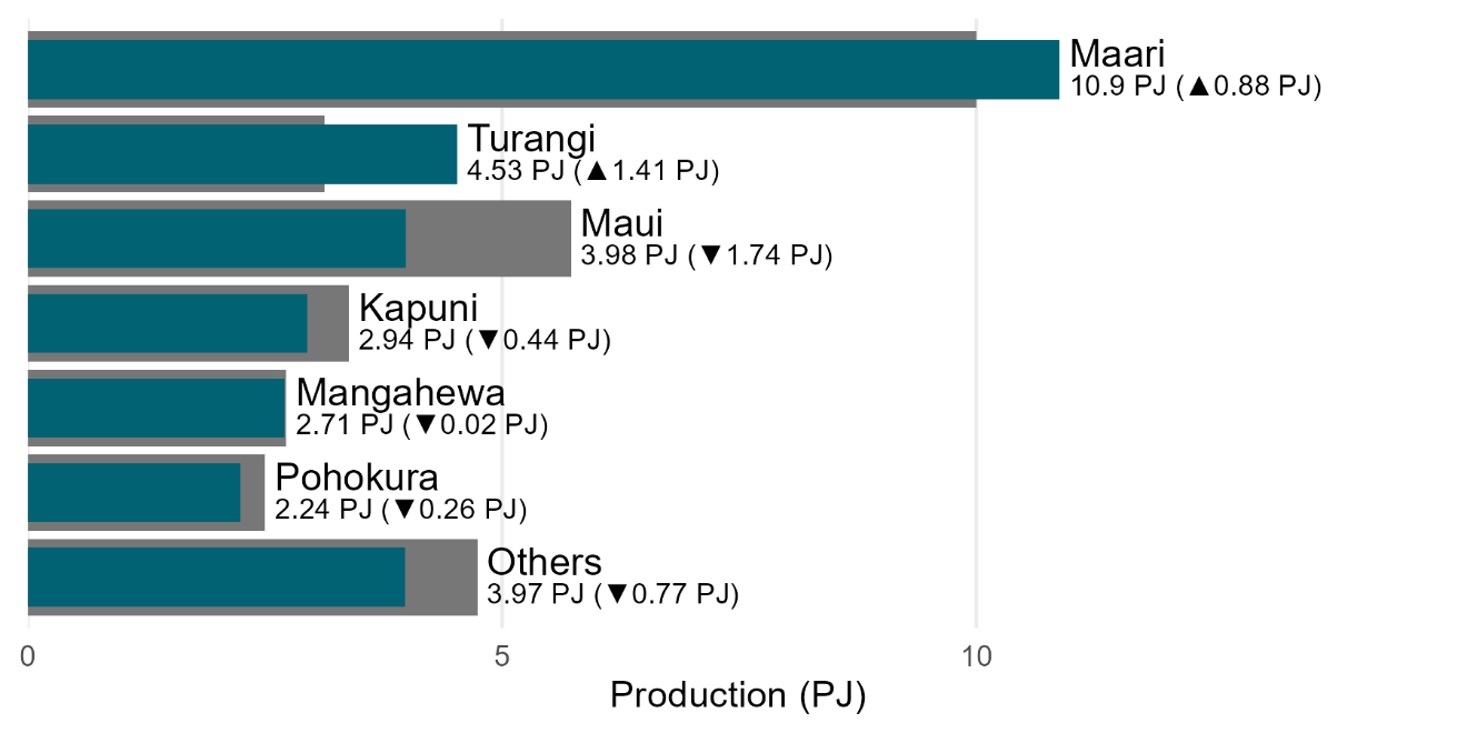
Figure F.1: Crude oil production by field. The teal bar shows the production for 2025, while the grey bar shows the production for 2024. The captions show year-on-year change in production.
View chart data for figure F.1
Liquefied petroleum gas (LPG) production for 2025 totalled 5.89 PJ, a decrease of 15% on 2024 production (6.91 PJ). LPG production within New Zealand is concentrated on a much smaller set of fields and has been particularly impacted by the decrease in production at Maui field (Figure F.2).
In 2025, 62% of New Zealand’s LPG supply came from indigenous production, as opposed to imports (Figure F.3). This figure has been gradually decreasing since the mid-2010s, when domestic production met almost all of New Zealand’s demand. As production has dropped, imports have increased to meet a relatively steady demand. LPG imports for 2025 totalled 3.55 PJ, an increase of 15% on 2024 imports.
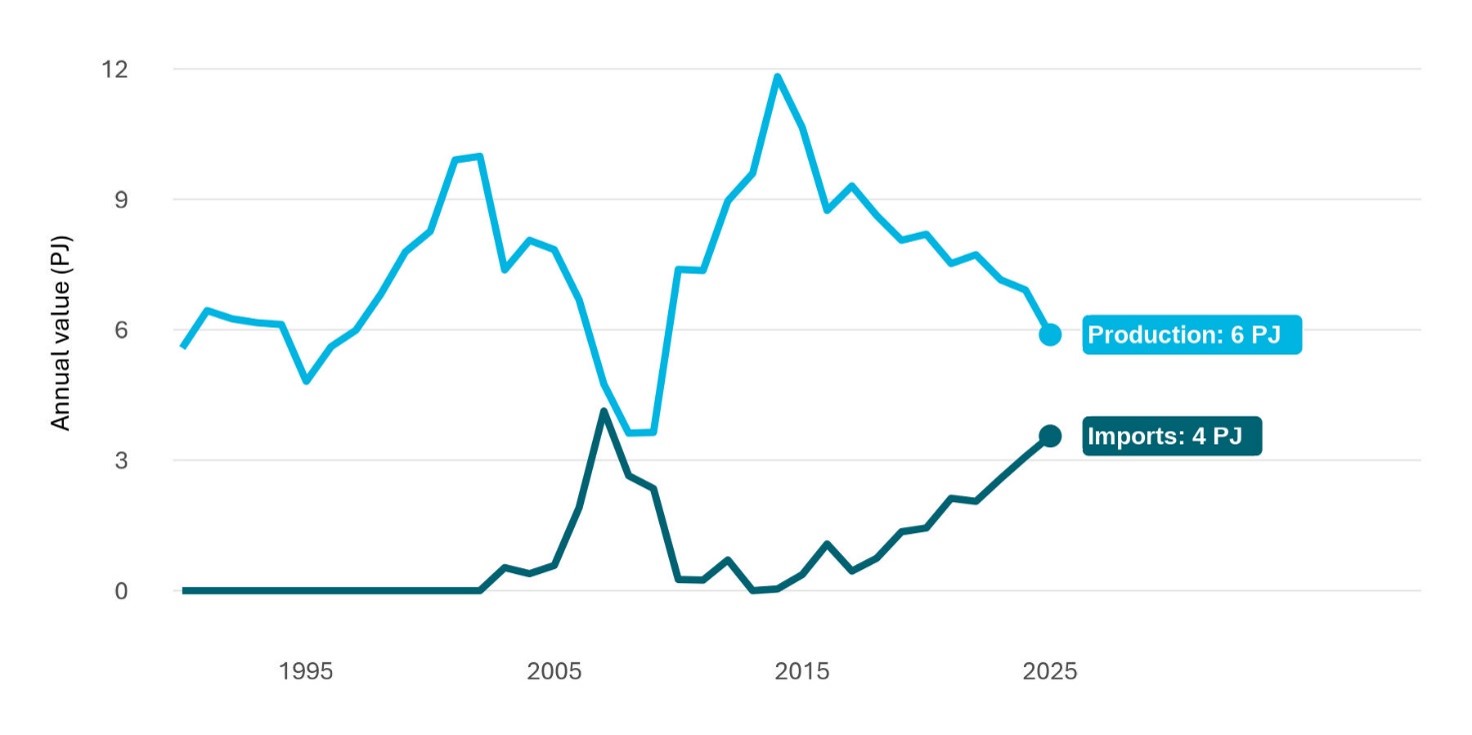
Figure F.2: LPG production and imports, per year since 1990.
View chart data for figure F.2
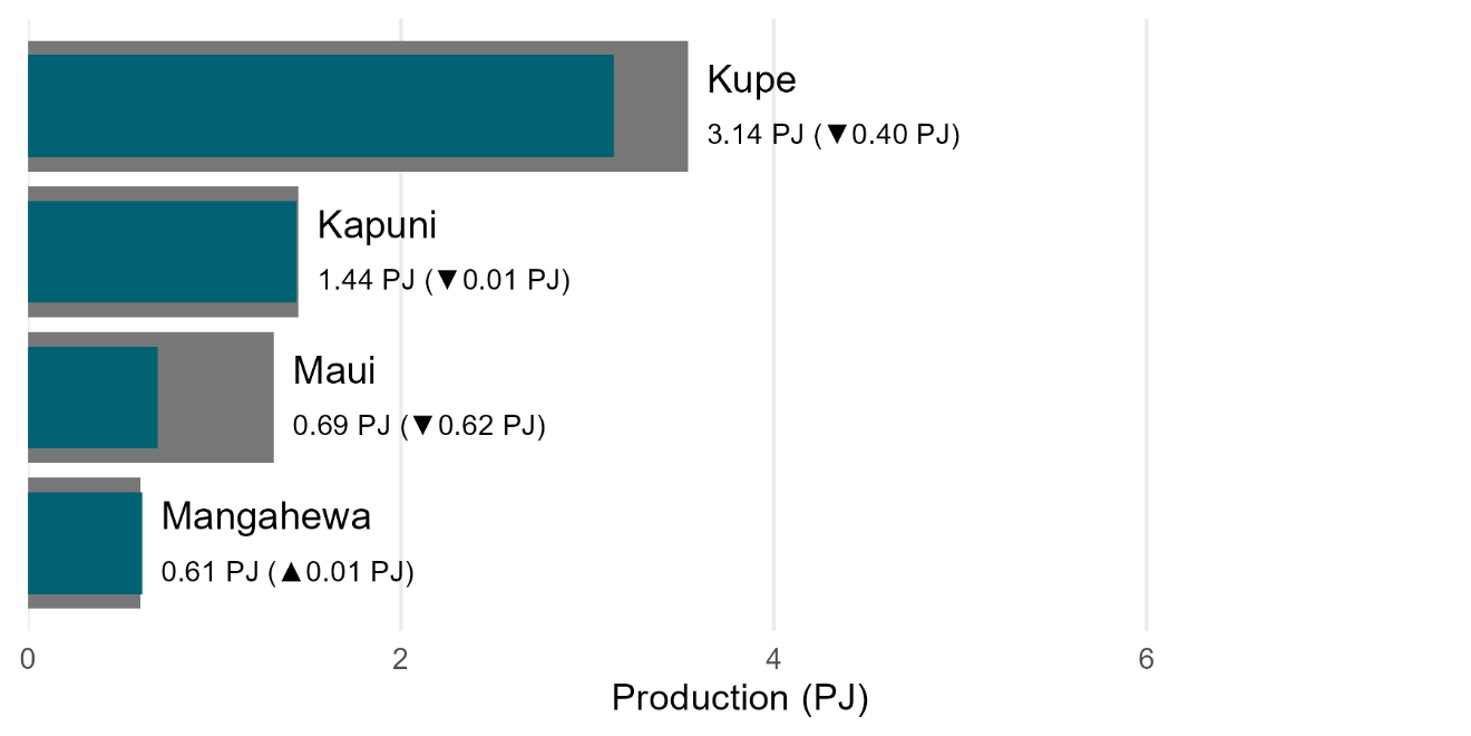
Figure F.3: LPG production by field. The teal bar shows production for 2025, while the grey bar shows production for 2024. The captions show year-on-year change in production.
View chart data for figure F.3
The decline in crude oil and LPG production reflects falling output from ageing oil and gas fields, many of which are approaching the end of their operational life. This is a long-term trend that we have observed since around 2007 (Figure F.4).
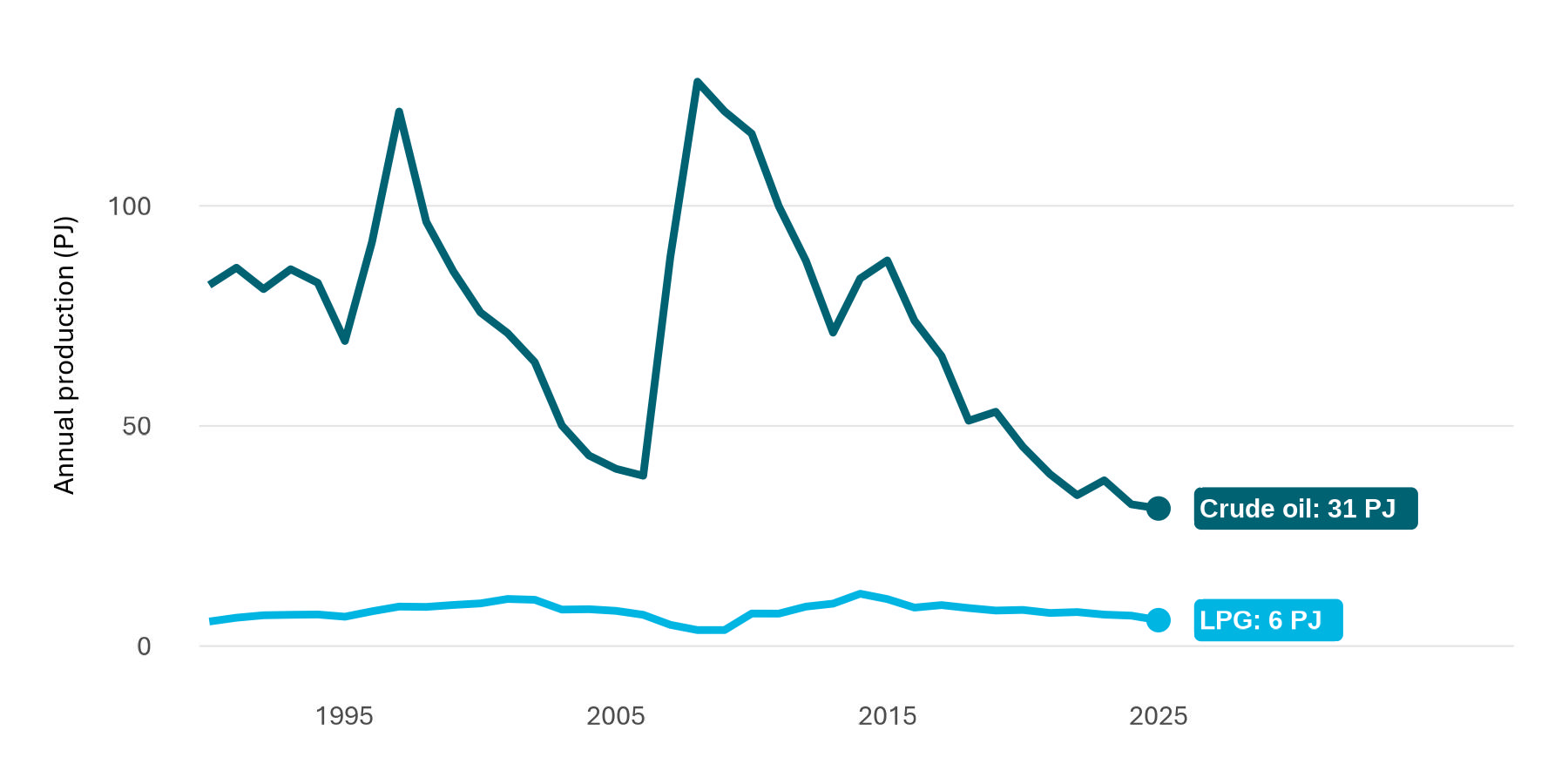
Figure F.4: Crude oil and LPG production over time.
View chart data for figure F.4
Imports and consumption remain steady
Oil imports for 2025 totalled 340 PJ, an increase of 0.5% on 2024 figures (338 PJ). Diesel continues to be New Zealand’s largest import, comprising 45% of all oil imports, followed closely by petrol (30%) and jet fuel (19%).
Since the closure of the Marsden Point refinery, New Zealand has imported all its refined petroleum products, mainly from Asian countries such as South Korea, Singapore, and Malaysia (Figure F.5; values based on Stats NZ overseas merchandise trade datasets). However, the contribution of countries differs across fuel types. For example, Japanese refineries supply around 10% of New Zealand’s diesel, but very little jet fuel or petrol, while Malaysian refineries supply much more petrol to New Zealand than any other fuel.
The Twelve-Day War between Israel and Iran in June 2025 threatened to impact global oil supply. However, this conflict had little effect on New Zealand’s imports of refined products, with the International Energy Agency concluding that the conflict had no impact on Iranian oil flows22.
The total domestic consumption of oil for 2025 was 271 PJ, a decrease of 0.3% on consumption for 2024 (272 PJ). A small decrease in petrol use (down 0.9% or 0.96 PJ) was partially offset by increased diesel consumption (up 0.3% or 0.40 PJ). Domestic transport accounts for the vast majority (76%) of oil products use in New Zealand, with the remainder split between the residential (8.1%), agricultural (6.4%), industrial (6.1%) and commercial (2.9%) sectors. Sectoral consumption trends have stayed relatively steady over the past decade, with very little change observed between 2024 and 2025.
Minimum stockholding obligation
In 2023 the Government amended the Fuel Industry Act 2020 to require fuel industry participants who meet certain criteria to keep a minimum amount of fuel on hand within New Zealand’s Exclusive Economic Zone. This obligation came into force on 1 January 2025 and requires obligated parties to report to MBIE on the amount of fuel they hold each month.
More information is available on MBIE’s website:
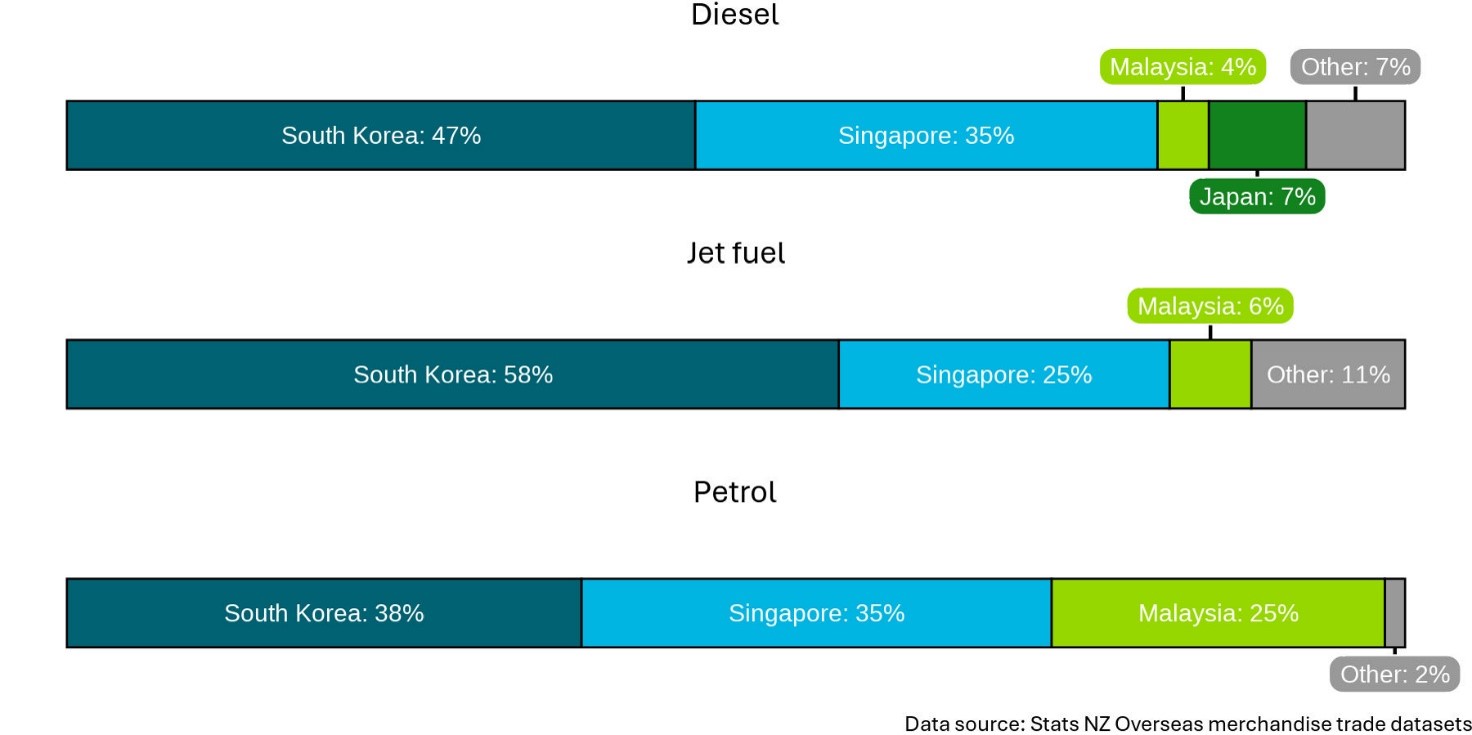
Figure F.5: Oil imports in 2025, by fuel and country of origin. Data source: Stats NZ Overseas merchandise trade datasets.
View chart data for figure F.5
Fuel prices remain steady
Petrol prices for the final quarter of 2025 were 279.60 cents per litre (c/L)23 for premium petrol and 260.60 c/L for regular petrol, a decrease of 1.0% and 0.8% respectively (when adjusted for inflation) on prices for the same quarter of the previous year. In contrast, diesel prices for the final quarter of 2025 were 212.68 c/L for retail consumer and 165.72 c/L for commercial consumers, an increase of 1.8% and 0.8% respectively on prices for the same quarter of the previous year (Figure F.6).
The average Dubai crude oil price for the year decreased from NZ$132 per barrel in 2024 to NZ$120 per barrel in 2025, reducing fuel import costs and placing downward pressure on domestic fuel prices. One factor contributing to this decline was an agreement by eight OPEC+ members to gradually unwind voluntary production cuts between April 2025 and September 2026 to increase global oil supply.
Partly offsetting this was the United States’ widespread imposition of tariffs and the resulting retaliatory tariffs imposed by other countries, contributing to increased international fuel prices over the first half of the year. Shipping costs also increased in the latter half of the year, particularly for Asian refineries, due to increased sanctions against various oil-producing countries (including Russia, Iran, and Venezuela).
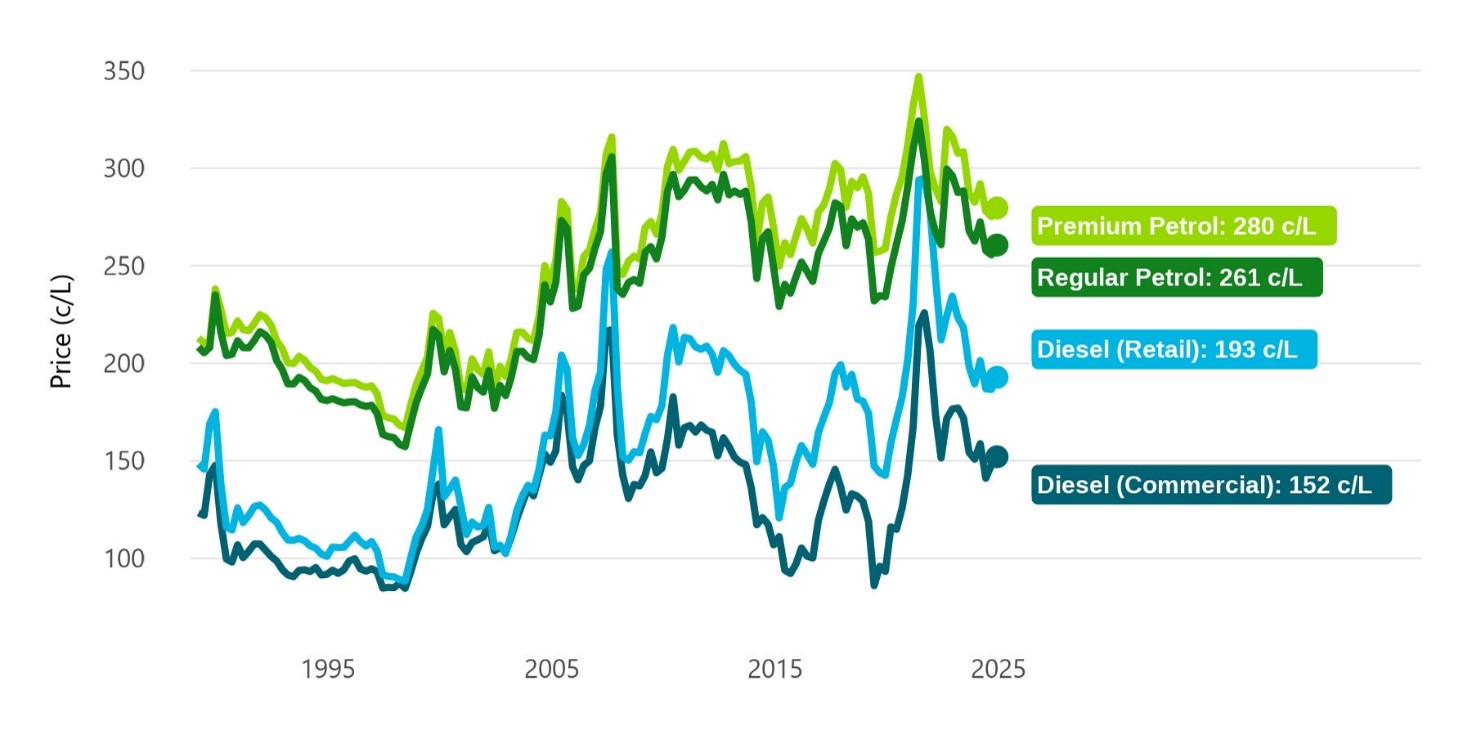
Figure F.6: Quarterly fuel prices over time, adjusted for inflation. All values are in December 2025 prices.
View chart data for figure F.6
Footnotes
[22] Oil market report, June 2025(external link) — International Energy Agency
[23] All prices quoted in this section are adjusted for inflation, and expressed as December 2025 values.