
Gas
Natural gas production continued to decline in 2025, with major gas users responding. Expected production over the coming years indicates supply constraints will continue to impact gas use within New Zealand.
On this page I tēnei whārangi
Background
New Zealand’s natural gas fields are concentrated around and off the coast of the Taranaki region (Figure E.1). Most of the gas produced by these fields is injected into a transmission network that delivers gas to major centres in the North Island18. New Zealand currently has no facilities to import or export natural gas and has limited storage capacity19, which means that all natural gas produced in the country is used domestically, and that any decline in gas supply is balanced by a decline in demand.
In New Zealand, natural gas is used for several applications, including:
- as a feedstock for chemical processes (that is being used for its chemical properties, rather than being burned for energy)
- for electricity generation
- for high-temperature industrial process heat
- for operating boilers and heaters in hospitals, schools, and other large facilities
- for residential cooking and heating.
One of the largest users of natural gas in New Zealand is Methanex, which uses natural gas as both a feedstock to produce methanol and a source of energy. While some large users have direct connections through private pipelines to natural gas fields, most users draw natural gas from the transmission network.
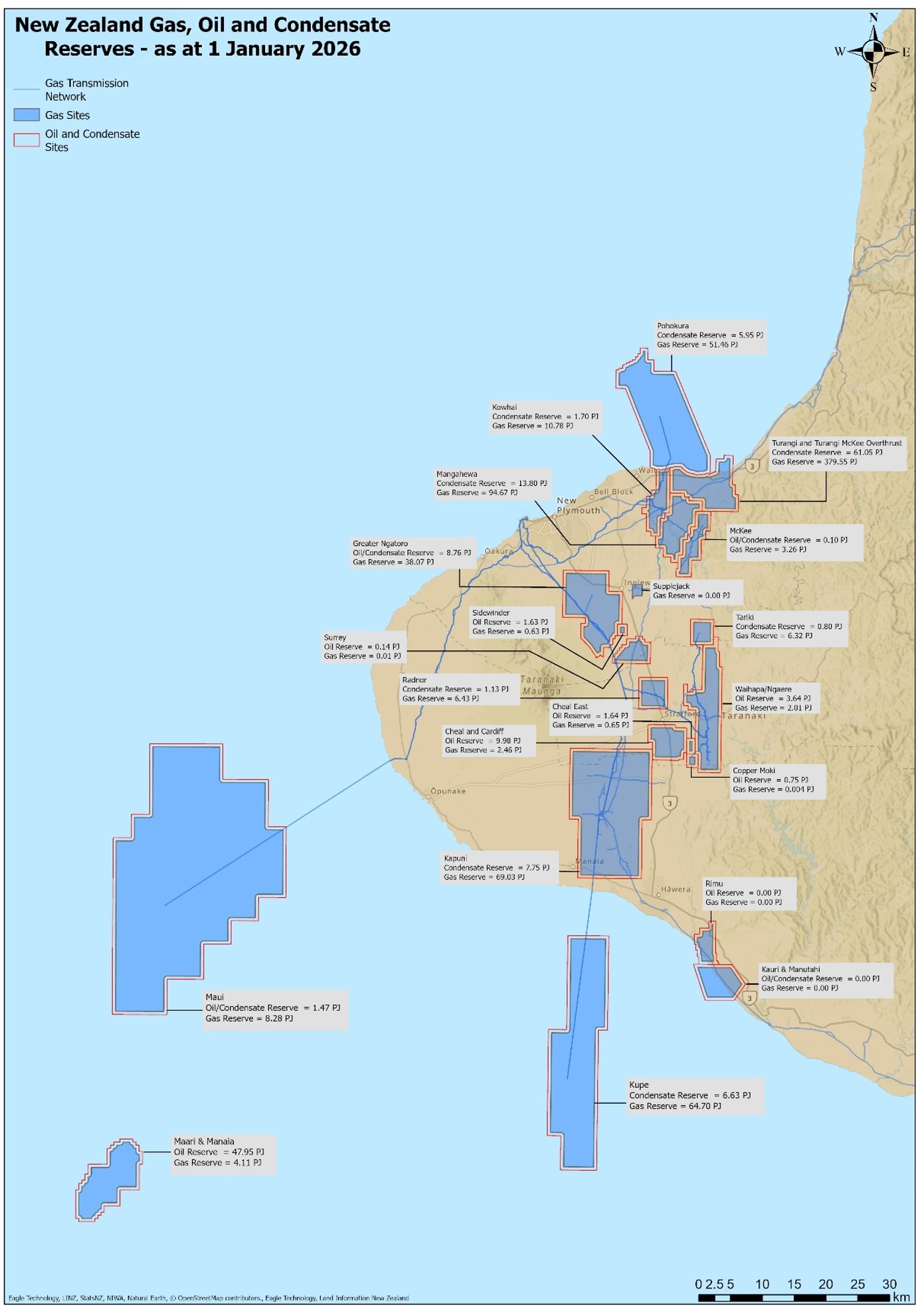
Figure E.1: A map of crude oil and natural gas fields in New Zealand, with remaining reserves indicated.
Image description
National gas supply continues to decline
Net production20 of natural gas in 2025 was 102 PJ, a decrease of 14% compared to production for 2024 (120 PJ). This was 4.1% lower than what had been expected in MBIE’s published petroleum reserves data (the gas production profile for 2025, as published in June 2025, was 107 PJ).
Contributing to this was several fields underperforming against expectations (Figure E.2), including the Pohokura field, which saw its production affected by the underperformance of the POW-5 offshore well (which had started production in March 2025). In contrast, the Mangahewa field performed stronger than expected, partially offsetting this general trend.
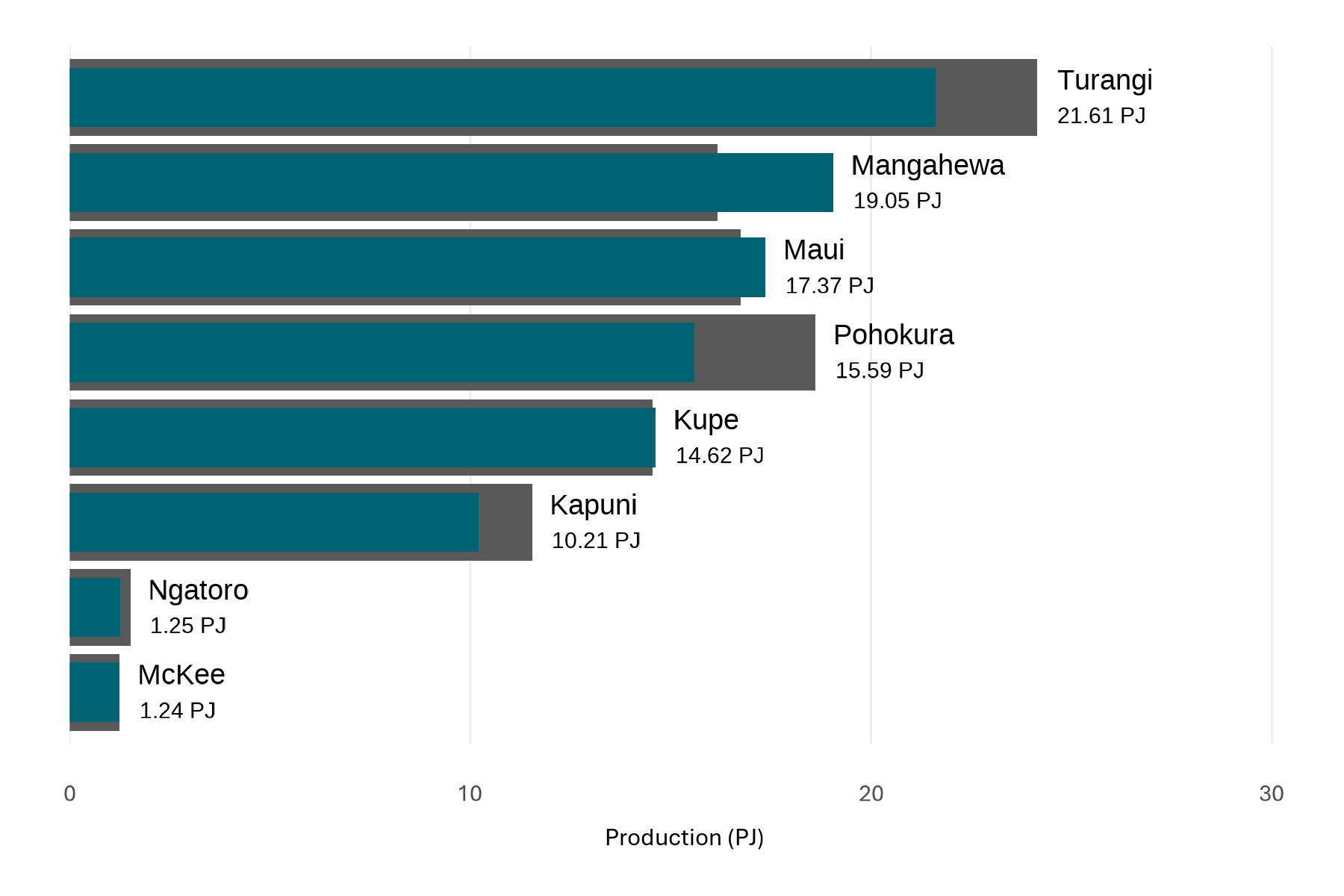
Figure E.2: Net production by field (only showing fields whose annual production in 2025 was greater than 1 PJ). The bars in grey show the expected production for the year based on production profiles, released as part of MBIE’s petroleum reserves publication.
View chart data for figure E.2
This decrease in gas production is part of a long-term trend seen for both gas and oil, driven by falling production from ageing fields (Figure E.3). Gas forms an important part of New Zealand’s energy sector through being a useful source of energy and feedstock for several industrial processes, as well as a key fuel source for dry-year electricity generation. In addition, New Zealand does not currently have the facilities to import natural gas, meaning any shortfall must be made up through alternative fuels.
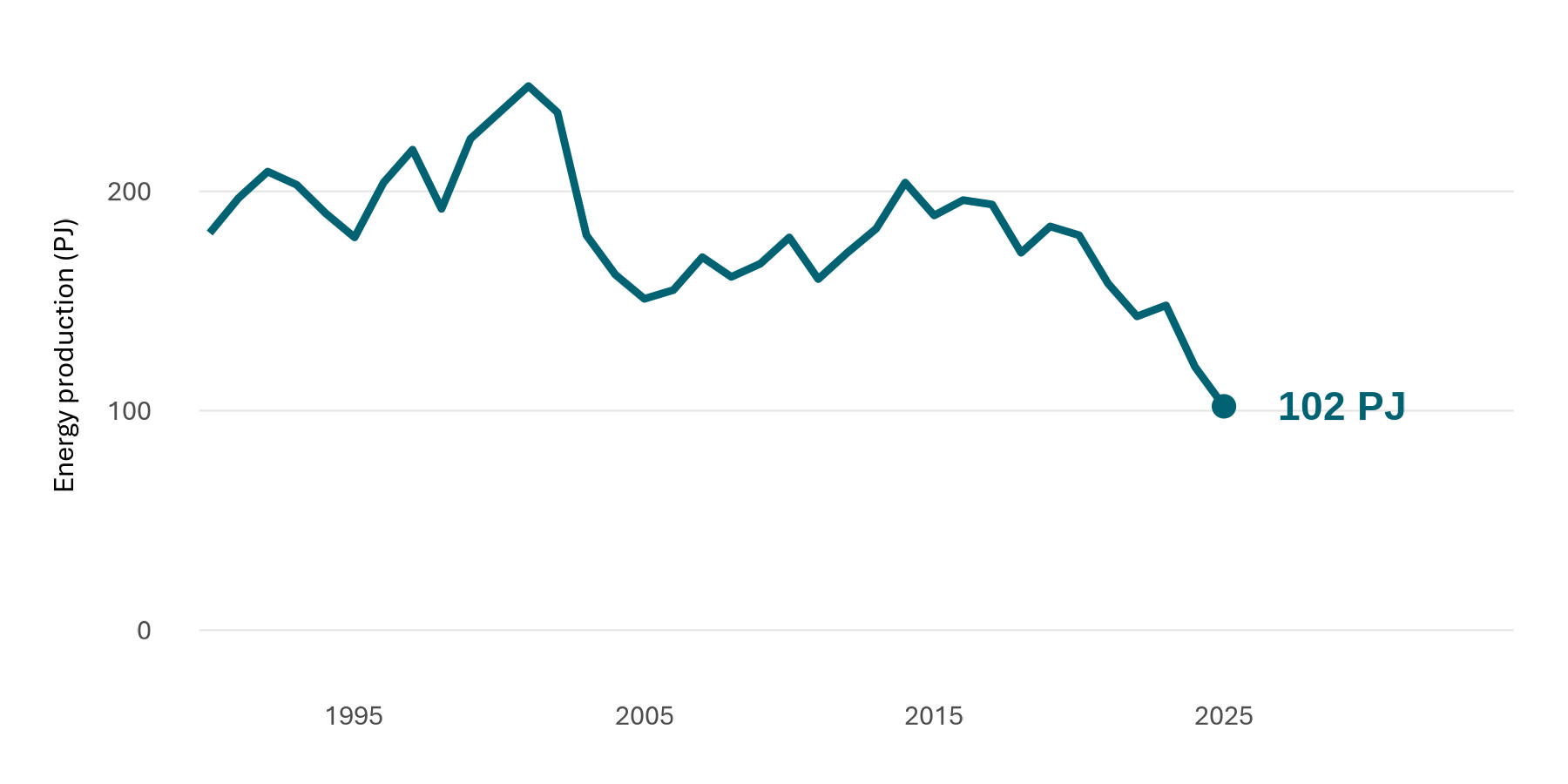
Figure E.3: Net gas production per year.
View chart data for figure E.3
Lower domestic gas supply continues to impact major users
Total gas use in 2025 (equal to the sum of electricity generation, cogeneration, non-energy use, and consumption) was 105 PJ, a decrease of 10% on the same figure in 2024 (118 PJ). This decrease was mainly driven by decreases in electricity generation (both main activity generation and cogeneration) and chemical sector use (Figure E.4).
Anticipating higher gas demand for electricity generation during a potential dry winter, Methanex paused methanol production for eight weeks in May 2025 to free up gas for the electricity market. This pause resulted in a drop in the total chemical sector use for the year. Genesis Energy ended up prolonging its usual one-month shutdown of its Unit 5 gas turbine at Huntly Power Station to free up gas for Ballance and other industrial gas users.
This is not the first time that Methanex has paused production to free up gas use for other consumers. The company idled its production facilities between August and October 2024 to free up gas supply for electricity generation. These pauses in production have resulted in a sharp decrease in the amount of gas used in the chemical sector in recent years.
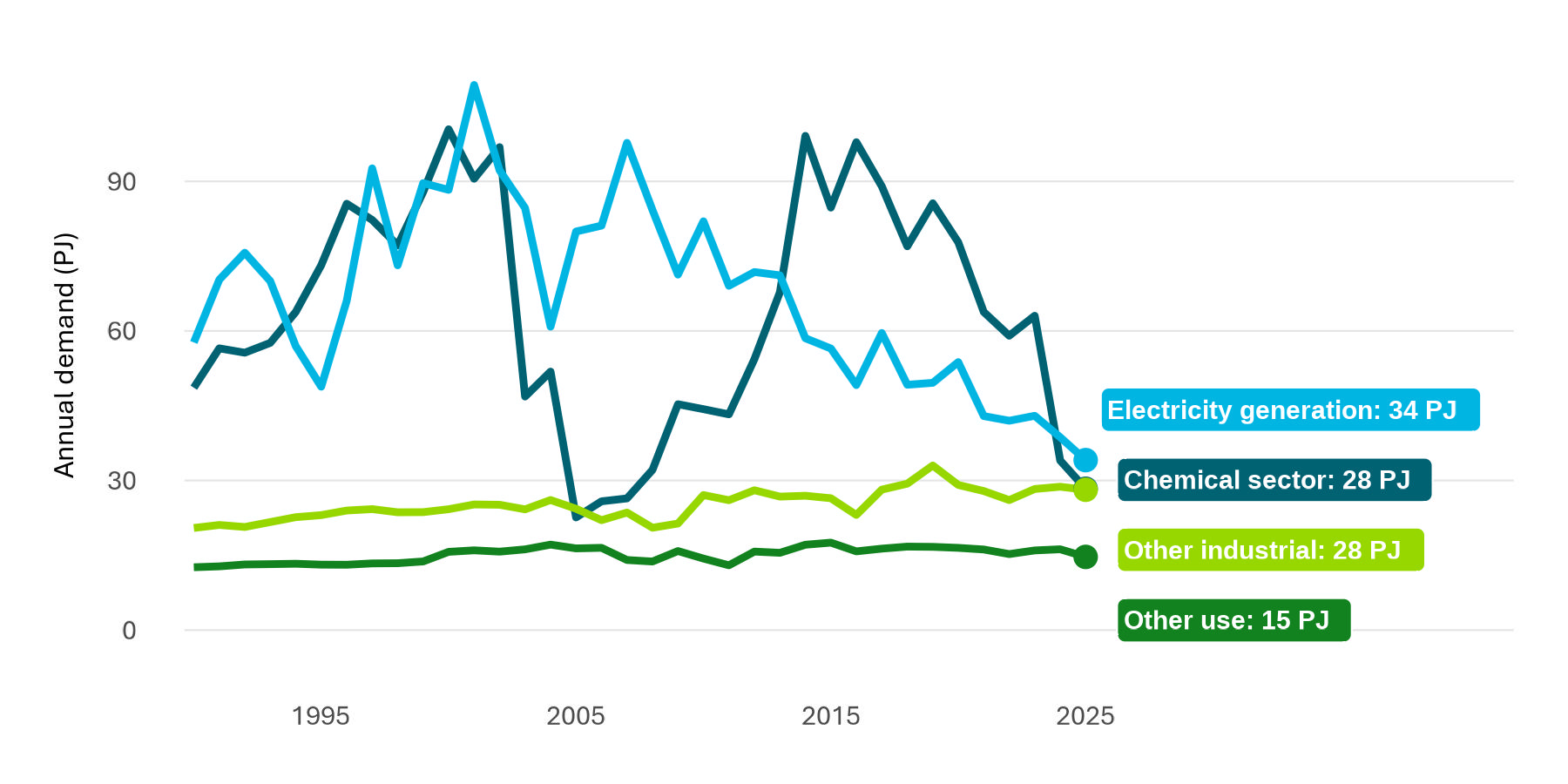
Figure E.4: Annual demand by sector. “Chemical sector” includes both consumption allocated to the chemical sector, and non-energy use. “Electricity generation” includes main activity generation and cogeneration.
View chart data for figure E.4
Reserves data indicates a low-gas future
Natural gas reserves provide an indication of the amount of gas that can be extracted from existing gas fields21. New Zealand’s natural gas reserves as of 1 January 2026 were estimated to be 731 PJ, a drop of 23% on 1 January 2025 figures. The decline reflected both the amount of natural gas extracted during 2025 and operators’ revised reserve estimates. Revisions can occur when operators complete more detailed reservoir surveys or development work that improves their understanding of how much gas can be extracted.
Significant revisions occurred at the Pohokura field (whose reserves dropped due to the poor performance of their POW-5 well) and at the Maui field (which has been signalled as reaching end of life by the end of 2026). In contrast, successful drilling at the Mangahewa field has allowed the promotion of some of the field’s previously reported contingent resources to reserves, partially counteracting the downward revisions at other fields. As a result of these revisions, the Turangi field now holds over half of New Zealand’s remaining gas reserves (Figure E.5).
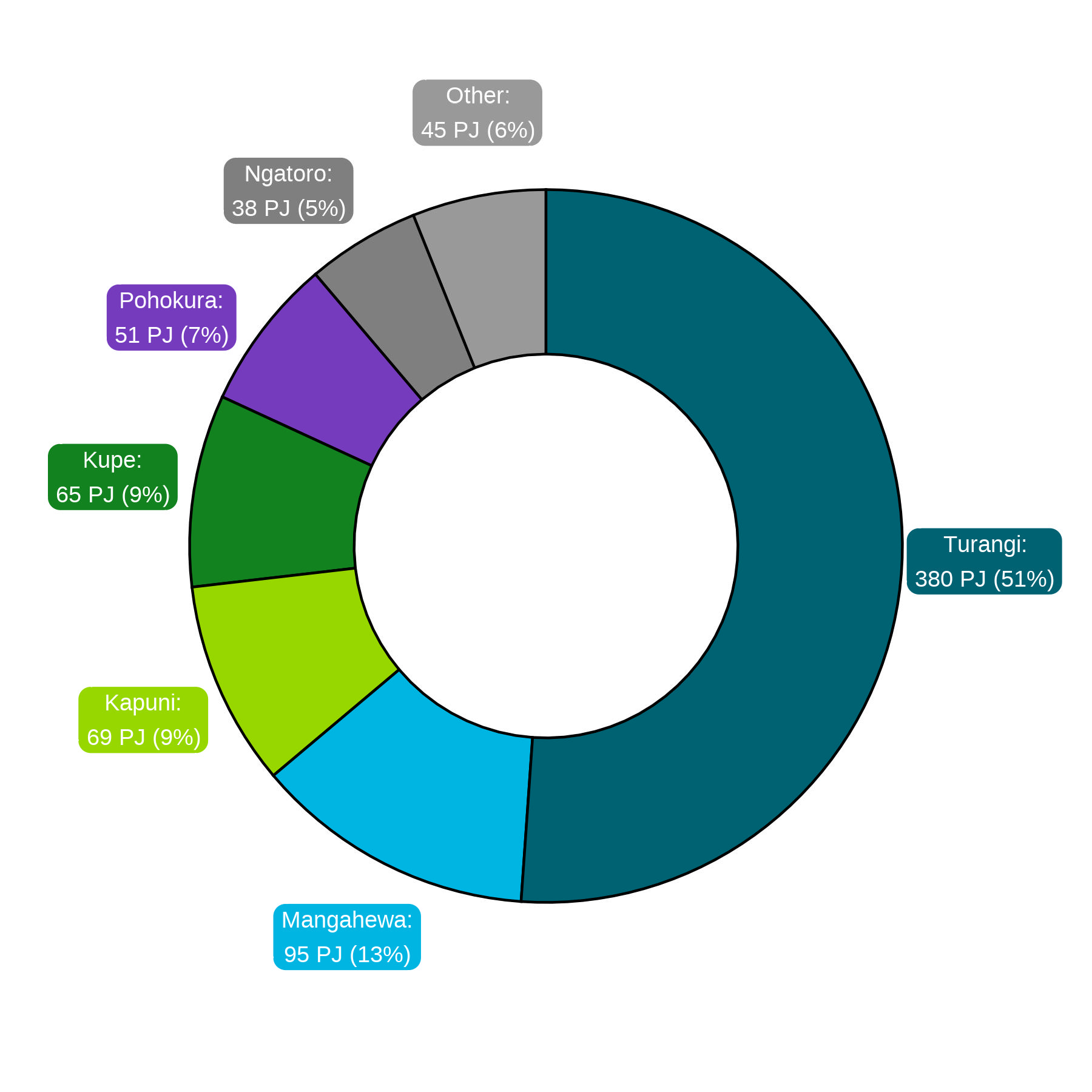
Figure E.5: New Zealand’s remaining gas reserves (2P) by field, as at 1 January 2026.
View chart data for figure E.5
Production profile data shows that these revisions have also had an impact on New Zealand’s expected gas supply over the next decade (Figure E.6).
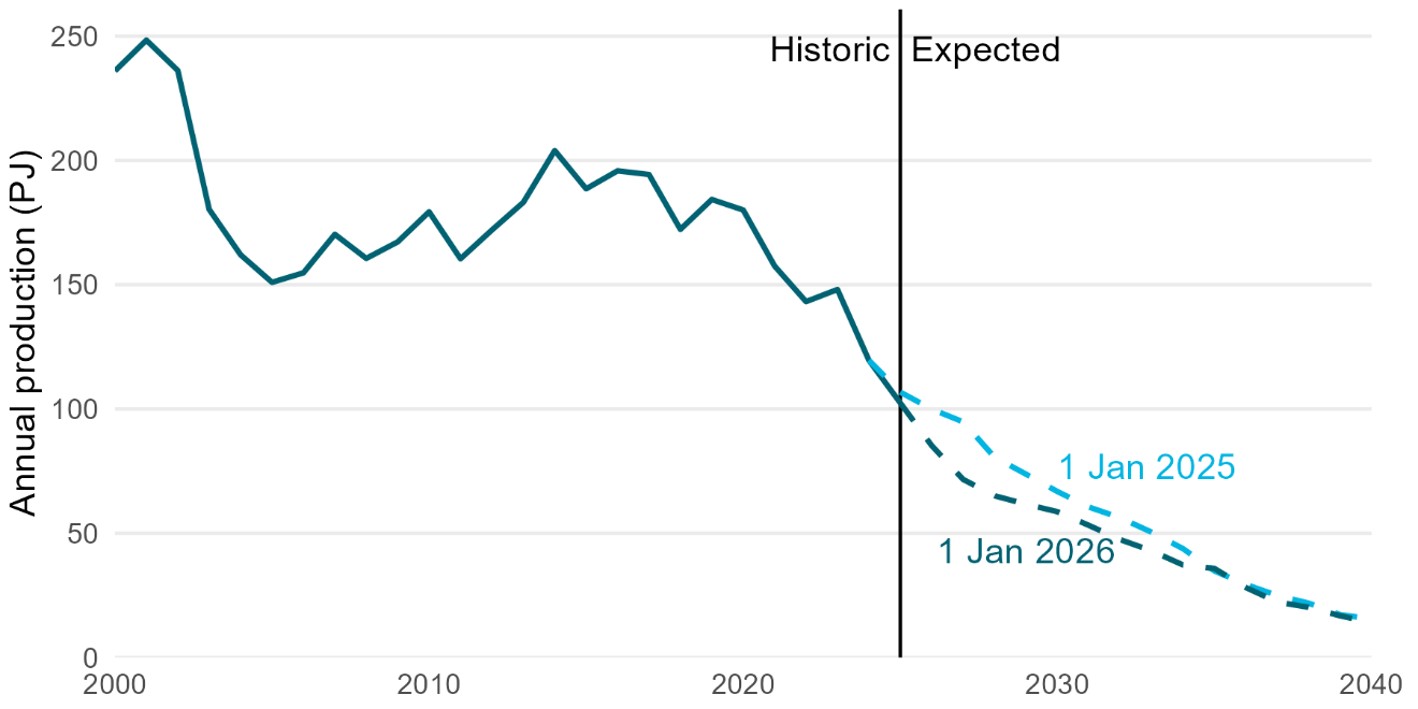
Figure E.6: New Zealand’s historic gas production (solid line) and expected future production out to 2040 based on production profile data provided by petroleum permit holders. Expected production as of 1 January 2025 and as of 1 January 2026 are both shown.
View chart data for figure E.6
Footnotes
[18] The South Island has no natural gas transmission network.
[19] New Zealand’s only large-scale natural gas storage facility is at Ahuroa.
[20] Net production is calculated as the total amount of gas extracted, minus gas flared, reinjected, and extracted as LPG.
[21] All petroleum permit holders are required to submit data on remaining reserves as well as expected future production profiles (a forecast of annual production based on existing development plans and field data) to MBIE on an annual basis, and this data is published as MBIE’s Petroleum Reserves data.