
Ground-based space infrastructure
Ground-based space infrastructure (GBSI) refers to the systems on Earth that interact with spacecraft.
On this page I tēnei whārangi
Overview
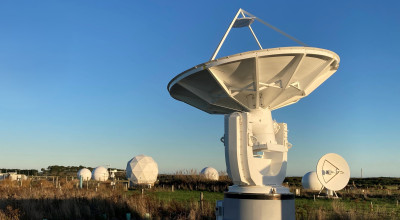 New Zealand is committed to the safe, secure and responsible use of space. In order to manage the risks posed by GBSI, the Government has established a regulatory regime covering new and existing infrastructure.
To support this, amendments to the Outer Space and High-altitude Activities Act (the Act) came into force on 29 July 2025, followed by amendments to the accompanying Regulations on 7 May 2026:
- Outer Space and High-altitude Activities Act 2017(external link) — New Zealand Legislation
- Outer Space and High-altitude Activities (Licences, Permits, and Authorisations) Amendment Regulations 2026(external link) — New Zealand Legislation
If you operate GBSI in New Zealand, this page will help you understand whether you need authorisation and what to do next.
Check if you need GBSI authorisation
You need an authorisation if you operate infrastructure in New Zealand for a regulated GBSI activity. Under the Act, a regulated GBSI activity means either of the following:
- Communicating with a space object including, without limitation, for the purpose of:
- tracking the space object
- telemetry
- controlling the space object
- Identifying or surveilling a space object.
For the purposes of this regime, a space object is defined as a launch vehicle that is launched into outer space, or a payload that is carried by a launch vehicle into outer space.
You are considered an operator if you directly communicate with the GBSI, or otherwise exercise direct control over the GBSI, unless the communication or control is carried on a temporary or intermittent basis under the supervision of the operator.
You are not an operator if, for example:
- you only host GBSI (i.e. own the land on which the GBSI is located but do not own or operate the infrastructure yourself)
- you lease GBSI to others, who themselves conduct the regulated activities (i.e. you own the infrastructure but do not operate it).
Examples of regulated activities
Examples of regulated activities include:
- Using a ground station to download data from a space object.
- Using a ground station to conduct tracking, telemetry and control (TT&C) with a space object.
- Using a ground station to conduct satellite trunking (i.e. providing satellite to mobile telecommunications for private users and businesses).
- Using a ground station to communicate with a space object to provide internet of things (IoT) connectivity.
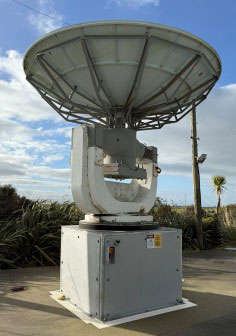
- Using a space radar or optical telescope to track, identify, or surveil a space object.
Activities that are not regulated
There are a number of exceptions to regulated activities, including:
- An activity of a personal, domestic, or household nature.
- An activity carried out as a recreational pursuit or hobby.
- An activity carried out for the purpose of astronomy.
- An activity carried out by or on behalf of an emergency service.
- Using a publicly available system to calibrate a measuring instrument, or to access a safety, positioning, navigation, or timing service.
- An activity incidental to an undertaking if the undertaking does not otherwise relate to GBSI or a regulated activity (for example, use by a farm, school, or hotel of a satellite dish or satellite internet terminal).
Examples of exceptions include:
- Use of satellite to mobile telecommunications for personal or business purposes.
- Use of a broadcast TV satellite dish for personal or business purposes.
- Use of a telescope to watch the stars, or for tracking space objects for personal reasons (e.g. the International Space Station).
Difference between GBSI authorisation and the Radio Spectrum Management regime licensing requirements
The requirements for GBSI authorisation are separate to those under the Radio Spectrum Management (RSM) regime licensing requirements. If your GBSI has a radio transmitter (and a receiver in some cases) then it requires a radio spectrum licence, which can permit communication with space station(s) (objects) under the Radiocommunications Act 1989. It is unlawful to transmit without a licence. GBSI authorisation does not replace a radio spectrum licence - you need both.
Radiocommunications Act 1989(external link) — New Zealand Legislation
For further information regarding the RSM regime licensing requirements, visit the RSM website: https://www.rsm.govt.nz/(external link).
If you are in scope: how to apply
If your activities are in scope, you must hold a GBSI authorisation before undertaking a regulated GBSI activity.
Before applying, you should:
- check whether the activities you carry out are regulated GBSI activities, referring to the above information
- gather the information required for your application (see details by clicking on the “Apply for GBSI authorisation” button below)
- make sure you have appropriate protective security arrangements in place (details below)
- if you operate on behalf of, or for the benefit of, others, make sure you have due diligence arrangements in place (details below).
Protective security arrangements
Your GBSI authorisation application must include a declaration confirming that you have in place protective security arrangements that meet the requirements in the Act to counter security threats in relation to activities under the authorisation. In broad terms these arrangements should show that:
- you have identified the security risks that arise from the operation of GBSI (including personnel security, information security and physical security).
- you have established reasonable measures to manage those risks.
Guidance on how to develop protective security arrangements can be found at the following link:
 GBSI Operator Protective Security Guidance [PDF 258KB]
MBIE does not need to see the protective security arrangements themselves. You only need to declare in your application that they are in place. However, MBIE has the power to assess these arrangements, as required.
Due diligence arrangements
If you are working with a partner, the GBSI authorisation application must include a declaration that you have partner due diligence arrangements in place.
A partner is anyone on whose behalf, or for whose benefit, you operate GBSI to carry out a regulated activity, such as a customer to whom you are providing ground station services (for example someone who is paying you to communicate with or track a satellite) or a research collaborator.
The due diligence arrangements will need to identify the steps you will take to verify the identity of your partners and understand the nature of their activities. The steps must be reasonable in the circumstances. Generally due diligence will not require anything more than desktop research to confirm that the information the operator has provided is consistent with publicly available information.
Guidance on how to develop partner due diligence arrangements can be found at the following link:
MBIE does not need to see the partner due diligence arrangements themselves. You only need to declare in your application that they are in place. However, MBIE has the power to assess these arrangements, as required.
New Zealand’s security threat environment
On 13 August 2026, NZSIS released its Threat Environment report in which it described the espionage threat faced by operators of GBSI. The threat report can be found at the following link:
New Zealand's Security Threat Environment 2026(external link) — New Zealand Security Intelligence Service
The report describes attempts to deceptively install GBSI in New Zealand that would advance a foreign state’s capabilities without authorisation or transparency about how it will be used.
NZSIS took the unusual step of calling out the activities of Purple Mountain Observatory, an entity based in the People’s Republic of China that has close links with its government. Purple Mountain was found to be behind an attempt to install equipment on a New Zealand site that would have been capable of collecting military-level intelligence.
This was not the first time an entity linked to Purple Mountain has tried to install GBSI here, and the report notes it is unlikely to be the last.
Investment opportunities can be a vector for espionage. Future attempts may involve further obfuscation or target your infrastructure by other means, including cyber intrusion.
Operators are encouraged to consider the findings of the report when assessing new and existing business relationships and to strengthen their due diligence and protective security practices using the guidance provided above.
Ongoing obligations after authorisation
GBSI operators are required to provide annual reporting
Under the Act, GBSI operators are required to provide an annual report confirming that:
- any information provided in the application for the authorisation is up to date.
- protective security arrangements continue to meet requirements.
- partner due diligence processes (if required) continue to meet requirements.
MBIE will provide a template for this reporting to authorisation holders ahead of each reporting deadline.
Compliance and enforcement
The Minister may vary, suspend, or revoke GBSI activity authorisation
The Minister responsible for Space may vary, suspend or revoke a GBSI activity authorisation on any conditions that the Minister thinks fit, if the Minister believes on reasonable grounds that:
- The authorisation holder has breached the Act, associated regulations, or any conditions of the authorisation.
- If it is deemed necessary in the interests of national security, compliance with any of New Zealand’s international obligations, or other national interests.
There are offences and penalties for non-compliance
Where necessary, MBIE will generally work with operators to help them achieve compliance with the new regime. However, it is an offence to operate GBSI without an authorisation, and depending on the circumstances this could lead to:
- An order requiring disposal of interests in, or rights to operate the infrastructure.
- A fine up to $50,000 and/or up to one year in jail for an individual.
- A fine up to $250,000 for an entity.
Additionally, it is an offence to provide false or misleading information in any material respect, which could lead to:
- A fine up to $10,000 for an individual.
- A fine up to $50,000 for an entity.
Webinar
MBIE and the New Zealand Security Intelligence Service hosted a webinar on 4 March 2026. This webinar provided details on how to protect businesses and New Zealand’s security in compliance with the new legislation, including a question-and-answer session.
Slides from the webinar and a list of the questions and answers are available at the links below:
In this section I tēnei wāhanga
Apply for GBSI authorisation
Use this page to prepare for and access the ground-based space infrastructure (GBSI) authorisation application form.