
Kiwi health innovation providing certainty for families
For thousands of people around the world, living with neurological condition hydrocephalus means living with uncertainty. Now a Kiwi company is stepping up to reshape the future of care.
On this page I tēnei whārangi
Hydrocephalus is caused by excess fluid building up around the brain. It affects anyone from premature babies to older adults, impacting the way the brain develops, functions, and communicates with the rest of the body.
The condition is commonly treated by inserting a shunt to drain the fluid. However, around half of all shunts fail within two years, often sending patients back to hospital with headaches that could indicate medical emergency.
Deciding whether a shunt has failed can be a high-stakes guessing game for neurosurgeons, families and patients alike. Enter Kitea Health.

Surgeon holding a sensor implant.
Tiny implant, big impact
Spun out from Auckland University and co-founded by Professor Simon Malpas, Kitea Health has developed a tiny, permanent implanted sensor that allows patients and clinicians to directly measure pressure inside the brain, providing real time, actionable information that can distinguish a true shunt failure from a false alarm.
“Right now, clinicians are often relying on symptoms like headaches to make decisions about hospital admissions, scans and surgery,” says Professor Malpas.
“That’s not ideal for anyone. We wanted to change the paradigm by giving patients and doctors objective data.”
The result is the smallest brain implant ever developed, weighing just 0.28 grams – about the same as a single sesame seed.
Unlike many other implants, the device has no wires or electrodes. It sits discreetly in the brain and is designed to remain there permanently. Patients can take readings at home using a handheld wand linked to a smartphone app, with results available in seconds.
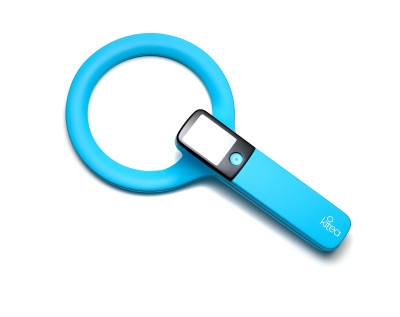
A Kitea Health implant pressure reading wand.
“For many families, especially those with very young children who can’t explain their symptoms, that certainty is life changing,” says Professor Malpas. “We hear consistently that anxiety levels drop significantly once people are able to monitor pressure directly.”
The technology’s impact is already being demonstrated through first in human clinical trials conducted in Auckland. To date, 21 patients, ranging in age from 18 months to 84 years, have received the implant. There have been no device failures and no adverse events.
In several cases, the sensor has confirmed rising pressure, helping clinicians act quickly. In others, normal pressure readings have shown that symptoms were caused by something else entirely, sparing patients unnecessary surgery and hospital stays.
“This has the potential to reduce strain on hospital systems while delivering better outcomes for patients,” says Professor Malpas.
An ongoing journey
Kitea Health’s journey from idea to clinical reality was made possible by early-stage public investment through the MBIE-administered Endeavour Fund, from which Malpas and his colleagues received $12 million in 2017.
“Kitea Health simply wouldn’t exist without that funding,” Professor Malpas says. “The scale of technical and regulatory work required to develop an entirely new class of brain implant is enormous. Without that support, we could never have taken this from concept to clinic.”
Since completing the programme, Kitea Health has raised more than $19 million in private capital, grown to a team of 20 staff, and moved into a facility in Auckland. The company is now focused on securing international regulatory approval, with the goal of partnering with a global medical device company to bring the technology to patients worldwide.
“It’s a long road,” says Professor Malpas. “But if we get this right, it could become part of standard care. That’s hugely motivating and it all starts with sustained investment in deep, high risk innovation.”