
Geothermal and geoheat utilisation across New Zealand
Examples of geothermal and geoheat development and innovation across the motu.
On this page I tēnei whārangi
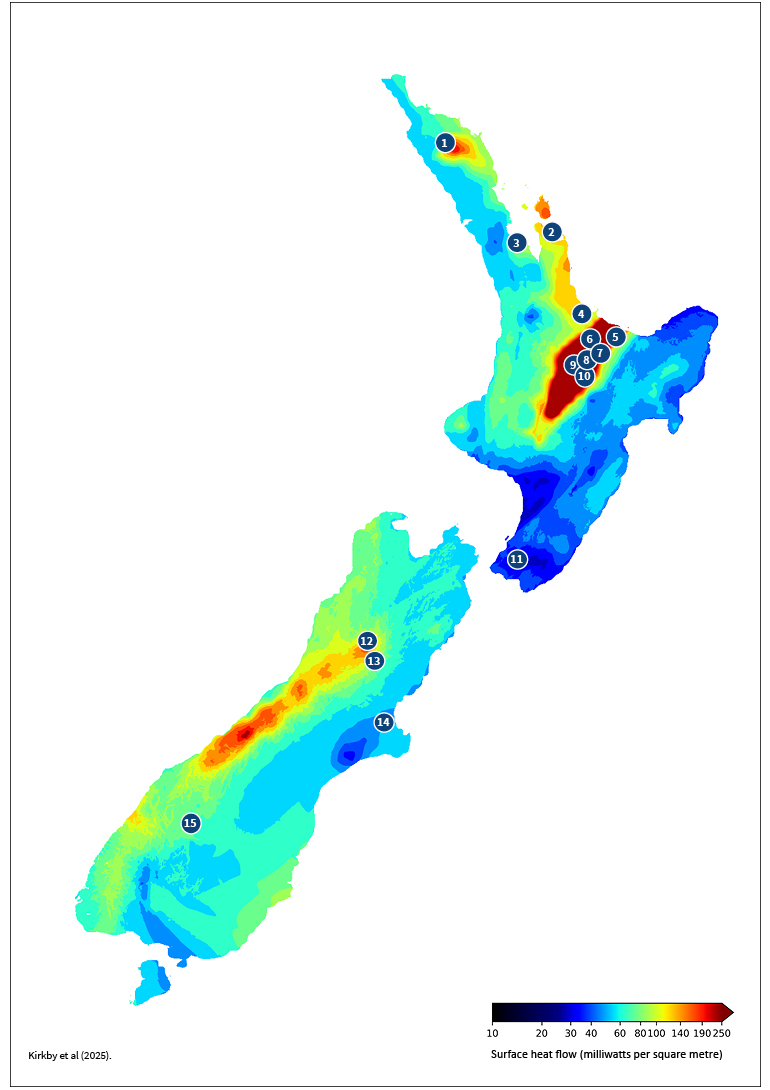
This map shows surface heat flow across New Zealand. Surface heat flow measures how much heat from within the Earth is transferred to the ground surface. Along with the thermal properties of rocks and soils, it is influenced by how quickly temperature increases with depth below the surface. Areas with low surface heat flow are blue, and areas with high surface heat flow appear as red.
Kirkby et al (2025)
Image description
1. The Ngāwhā geothermal reservoir enables both tourism and energy security in the Far North by feeding the Ngāwhā Springs mineral hot pools and Top Energy’s Ngāwhā geothermal power station (57 MW). Notably, this is the first power station in New Zealand to achieve net carbon zero status due to 100 % reinjection of CO2-containing gases into the Ngāwhā geothermal reservoir.
2. The Coromandel peninsula contains several small geothermal systems which feed popular tourist attractions such as the Lost Spring hot pools in Whitianga and Hot Water Beach.
3. A research project led by the University of Auckland’s Geothermal Institute is exploring how underground temperatures can be harnessed to reduce water heating costs in Auckland.
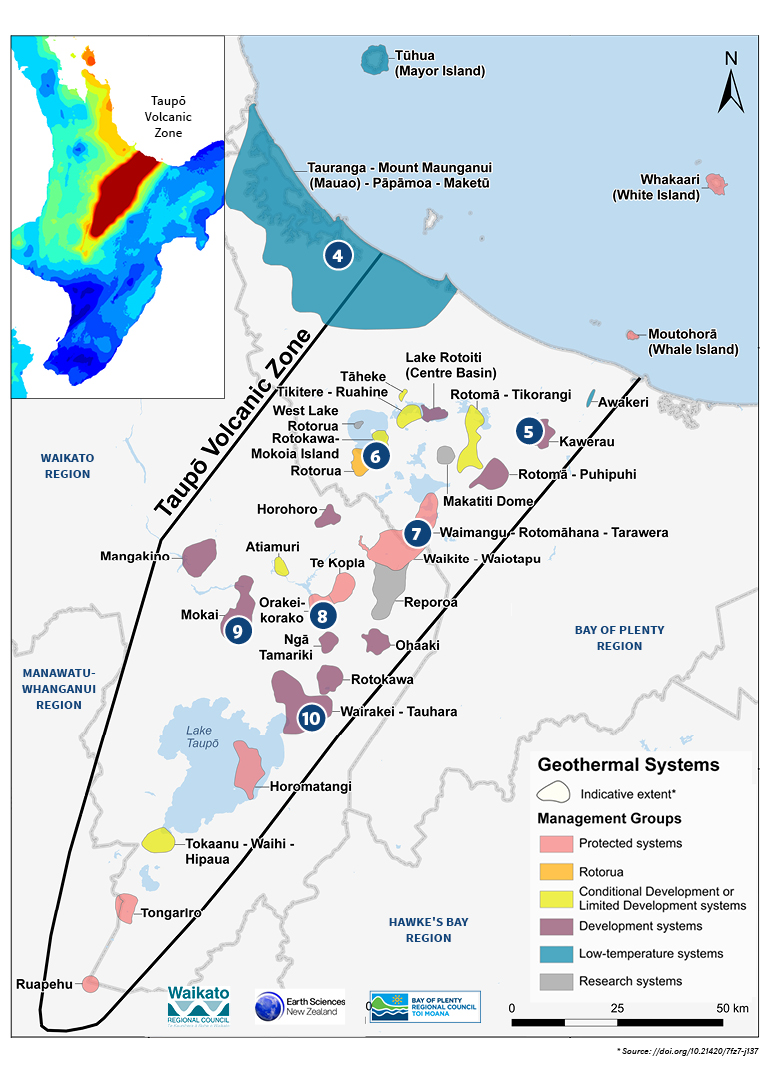
4 - 10. Take a closer look at the Taupō Volcanic Zone below.
11. Lower Hutt City Council’s administration building is heated by ground source heat pumps, integrated into the building’s structural piles.
12 - 13. Maruia Hot Springs and Hanmer Springs thermal pools are popular geothermal spa and wellness experiences in the South Island.
14. Numerous buildings in Christchurch, including Christchurch Airport, Tūranga central library, Environment Canterbury offices, and several University of Canterbury lecture theatres are heated by water bore and ground source heat pump technology.
15. Tewa Banks is a 68-home development in Arrowtown for the Queenstown Lakes Community Housing Trust. The homes are connected to a networked ground source heat pump system, providing affordable heating and hot water.
Geothermal activity in the Taupō Volcanic Zone
* Source: //doi.org/10.21420/7fz7-j137 — GNS Science Dataset Catalogue
Image description
4. EECA’s Regional Energy Transition Accelerator (RETA) report specifically highlighted the potential of Tauranga’s low heat geothermal system for businesses and primary industries looking to decarbonise.
5. Ngati Tuwharetoa Geothermal Assets supplies geothermal steam and brine to a variety of industrial customers in Kawerau, including Eastland Generation’s TOPP1 and TOPP2 geothermal power stations and the Essity paper mill, which has installed the world’s first 100 % geothermal tissue-drying machine. Opened in early 2026, TOPP2 (49 MW) is New Zealand's newest geothermal power station.
6. Rotorua Hospital and several council buildings utilise geothermal heating systems.
World-class geothermal tourism attractions in the Rotorua district, often showcasing both geothermal wonders and Māori culture, include Whakarewarewa Living Māori Village, Hell’s Gate, Wai-O-Tapu and Te Puia. Pōhutu, the largest geyser in the southern hemisphere, erupts up to 20 times a day, shooting geothermal water up to 30 metres into the air.
7. Waimangu Volcanic Valley contains several globally-significant geothermal surface features, including the brilliant blue Inferno Crater and Frying Pan Lake (one of the world’s largest hot springs).
8. Orakei Korako is New Zealand’s largest geyser field, even despite the tragic loss of more than 250 hot springs and geysers that occurred during the formation of Lake Ohakuri for the Waikato River hydro-electric power scheme in 1961. Orakei Korako highlights the vibrant colours of geothermal landscapes due to the presence of colourful algae which grow in the warm temperatures of geothermal waters. Orakei Korako also contains New Zealand’s only geothermal cave and what are believed to be the largest naturally fault-stepped silica terraces since the destruction of the Pink and White Terraces in 1886.
9. Tūaropaki, an ahu whenua trust, has developed one of New Zealand’s most advanced and integrated geothermal ecosystems, centred around the Mōkai geothermal power station (113 MW) which is operated by Tūaropaki Power Company in partnership with Mercury New Zealand. The geothermal ecosystem also includes Miraka, the world’s first geothermally powered dairy processing company, the geothermally heated Gourmet Mokai glasshouses and, in partnership with Japan’s Obayashi Corporation, Halcyon Power, New Zealand’s first commercial-scale green hydrogen plant.
10. Opened in late 2024, Contact Energy’s Tauhara geothermal power station (174 MW) is capable of powering around 200,000 homes.
The He Ahi eco-business park development supplies geothermal heat from some of Contact Energy’s wells that tap into the Tauhara geothermal field. This allows small and medium sized businesses to access geothermal heat without needing to drill their own wells.