
Biographical Information Research Funding New Zealand Board members
Biographies for the Research Funding New Zealand Board.
On this page I tēnei whārangi
Dr Emma Blott – Chair
 Dr Emma Blott is an experienced executive and governance leader in life sciences research and development. She is currently Chief Commercial Officer at Comvita, a New Zealand based global natural wellness company.
Other roles have included General Manager (Commercial) at the Livestock Improvement Corporation (LIC), where she oversaw LIC’s international business and LIC’s growth ventures and partnerships overseas and in New Zealand. Previously she held several senior positions in commercial, mergers and acquisitions, research and development, innovation and strategy functions within the Fonterra Cooperative Group over a 14 year tenure, following 3 years in investment banking in New Zealand.
She completed her PhD in Clinical Biochemistry at the University of Oxford, United Kingdom and then undertook post-doctoral research in immune cell biology before moving into the commercial sector.
Emma has extensive stakeholder and relationship management experience. Previous governance roles include Board Chair of Agrigate GP Ltd and Beacon Automation Pty Ltd and other LIC-related directorships in New Zealand and overseas. She has also served as a Director of the Pastoral Greenhouse Gas Research Consortium over 2 terms. Emma currently serves on the Board at Nbryo Pty Ltd, an agritechnology company based in Australia and is a Trustee for Growing Future Farmers in New Zealand. Emma also works alongside smaller ventures in a commercial capacity.
Professor Aidan Byrne
 Professor Aidan Byrne is a senior academic leader and physicist with extensive experience in research governance, strategic investment, and science policy.
He was previously Provost at The University of Queensland and CEO of the Australian Research Council (ARC), where he led national research funding programs and advised the government on science and innovation policy.
His governance roles span Australasia and Asia, including Chair of the MBIE Science Board and advisory positions in Singapore and Australia.
With a research background in nuclear physics and material science and over 200 publications, Professor Byrne combines deep scientific expertise with a strong record in collaboration and commercialization.
He is a Fellow of the Australian Institute of Physics and recipient of the ANU Peter Baume Award for eminent service to science and public policy.
Professor Dianne Gleeson
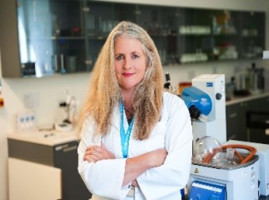 Professor Dianne Gleeson is a Professor of Ecological Genetics in the Faculty of Science and Technology at the University of Canberra and Director of the National eDNA Reference Centre.
A senior research leader with more than 25 years’ experience, she specialises in the development and accreditation of molecular tools for biodiversity monitoring and biosecurity decision-making across Australia and Aotearoa New Zealand.
She is the current Vice-President of the Southern eDNA Society and Deputy Director of the Australian Research Council Plant Biosecurity Training Centre.
Previously at Manaaki Whenua – Landcare Research, she founded EcoGene®, recognised with a national Women in Science Entrepreneurship Award.
Professor Gleeson brings deep expertise in applied genomics, trans-Tasman science systems, research governance, and strategic research leadership.
Dr Sue Bidrose
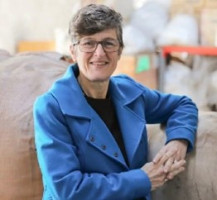 Dr Sue Bidrose is the former CEO of AgResearch, and a previous Chair of Science New Zealand. She also served as Chief Executive of Dunedin City Council.
Sue is an experienced leader with a strong background in science, governance, and public accountability.
She began her career as a Laboratory Technician, in a lab specialising in metabolic diseases of dairy cattle before moving into central government and operational leadership.
Her governance experience includes serving as a Trustee of the Wise Group, Chair of Te Pou/Blueprint, Director of Civic Financial Services, and Chair of the Local Government Commission.
Sue brings proven leadership, expertise in stakeholder management, and deep knowledge of New Zealand’s science system, including funding mechanisms, supported by extensive research and science community networks.
Distinguished Professor Sir Peter Hunter
 Professor Sir Peter Hunter FRS is a Distinguished Professor at Auckland University, former Chair of the Marsden Fund Council and a Director on the Callaghan Innovation Board.
He is a globally recognised bioengineer and founding Director of the Auckland Bioengineering Institute (ABI), at the University of Auckland, a Fellow of the Royal Society (London), and holds honorary or visiting Professorships at a number of Universities around the world.
A recipient of the Rutherford Medal, Sir Peter’s pioneering work in computational modelling of human physiology has advanced digital health and medical technologies worldwide.
He has championed commercialisation through the ABI, fostering global partnerships across health and technology sectors. With over four decades of leadership and innovation, Sir Peter brings unmatched expertise in science, governance, and cross-sector collaboration.
Professor Amanda Barnard
 Professor Amanda Barnard is a Senior Professor of Computational Science at the Australian National University (ANU). She is currently a Director on the Board of Research and Education Advanced Network New Zealand (REANNZ), and previously on the Board of New Zealand eScience Infrastructure (NeSI).
She is internationally recognized for computational modelling of nanomaterials with applications in energy, environment, and health; an is currently a global pioneer of AI for nanotechnology and biotechnology.
Amanda has held senior leadership roles at CSIRO and ANU, managing large interdisciplinary teams and global collaborations. She currently advises the Singaporean National Research Foundation, European Research Council, and the Australian Government on research strategy and policy.
Her governance experience spans chairing scientific committees, leading national infrastructure projects, and building international research networks. Amanda has contributed to trans-Tasman science initiatives and remains committed to advancing research excellence, innovation, and global scientific collaboration.
Professor Brett Cowan
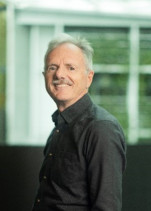 Professor Brett Cowan is a senior leader in clinical health sciences and biomedical engineering. He is Pro Vice-Chancellor at the Auckland University of Technology (AUT) and Dean of the Faculty of Health and Environmental Sciences. Previously he was Chief Scientist at Environmental Science and Research (ESR).
With expertise spanning engineering, medicine and business, Brett has driven major research and commercialization initiatives. His leadership experience includes the University and Crown Research Institute sectors (now PRO’s) including international clinical trials with a focus on IP, infrastructure and translational research.
Brett chairs the Mātai Medical research Institute Board of Trustees and is Board Chair of the NZ Synchrotron Group overseeing significant health and research infrastructure. He also sits on the Health Research Council of New Zealand.
Brett has worked closely with government and industry on science strategy, pandemic management, and regional health innovation. Brett brings deep scientific expertise, commercial insight and strategic governance - anchored in a commitment to innovation, equity and impact.
Dr Meika Foster

Dr Meika Foster has a background in Nutrition Science, Biochemistry and Law. She is the founding director of Edible Research Limited and an Honorary Associate Professor at the University of Auckland.
Dr Foster specialises in translational research, supporting the development of high-value, environmentally sustainable, functional ingredients. Her expertise spans leadership, sector networks, and New Zealand’s science system, including funding mechanisms.
She is currently a Board member of Ngā Pae o te Māramatanga Centre of Research Excellence and Food Standards Australia New Zealand (FSANZ). In her research capacity, she has contributed to Endeavour, Catalyst and HRC Research Programmes, among others.
Dr Foster is skilled at navigating interdisciplinary interfaces—bridging science and mātauranga Māori, public and private sectors, and science and law—ensuring research delivers meaningful impact for diverse stakeholders.
Dr John Roche
 Dr John Roche is the Deputy-Chair of the Prime Minister’s Science Innovation and Technology Advisory Council (PMSITAC). To foster strong relationships between Research Funding New Zealand (RFNZ) and PMSITAC, John is an Observer on the RFNZ Board and an Ex-Officio member of the RFNZ Ministerial Advisory Group (MAG).
In the role of Observer, John attends RFNZ Board meetings but does not participate in the Board’s Statutory functions and does not make funding decisions. As an Ex-Officio member, John attends RFNZ MAG meetings as a full member.
For more on John’s role with PMSITAC and his full biography, visit:
Prime Minister’s Science, Innovation and Technology Advisory Council