Feasibility permits
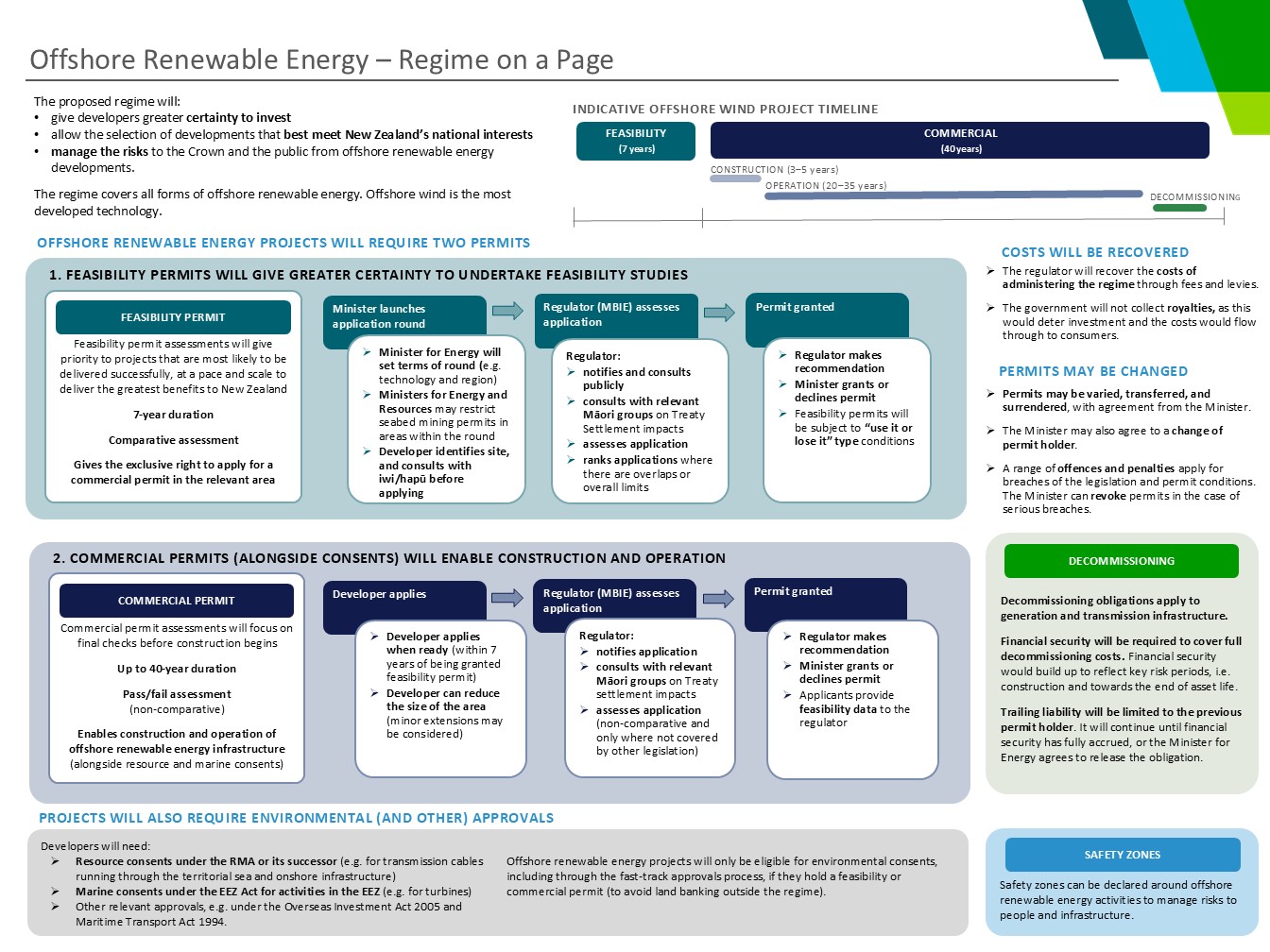
A feasibility permit provides developers an exclusive pathway to apply for a commercial permit for the same area in the future. This pathway provides developers with greater certainty over future development rights in the area for the construction of their offshore renewable energy project. This means developers are more likely to pursue offshore renewable energy projects, including carrying out feasibility studies on the area.
Applying for a feasibility permit
The Minister is responsible for launching application rounds, during which developers can apply for a feasibility permit.
In launching a round, the Minister will provide key details such as:
- opening and closing dates for applications
- eligible permit area locations
- any limitations to which applications are subject (for example, the type of technology and generation capacity).
The Minister for Energy is responsible for deciding whether to grant a feasibility permit to a developer.
Feasibility permit duration
Feasibility permits will be granted for 7 years. In exceptional circumstances, feasibility permits may be extended for up to an additional 7 years if specific criteria are met, in accordance with the Offshore Renewable Energy Act 2026.
Application fee and annual levy
Applicants for a feasibility permit must pay an application fee when submitting an application. This fee helps recover the costs of assessing applications.
If a feasibility permit is granted, permit holders must also pay an annual levy. This levy is divided among all feasibility permit holders and supports the ongoing administration, monitoring, and regulation of the offshore renewable energy regime.
What happens during the feasibility period
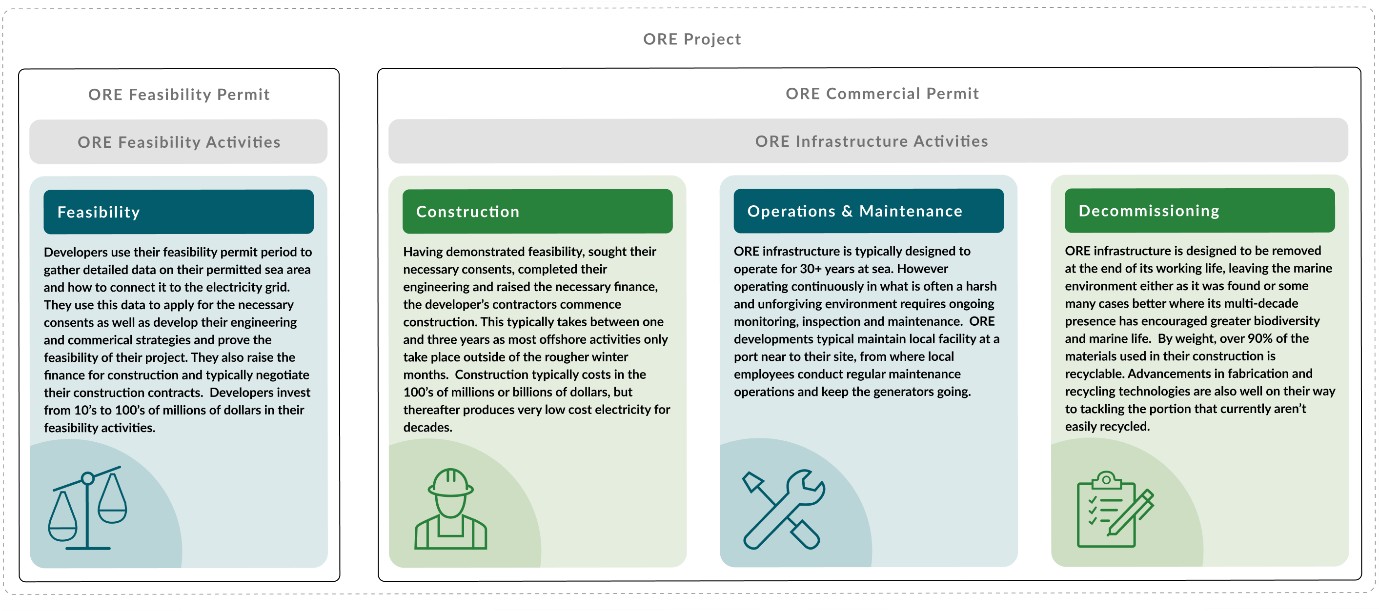
During the feasibility period, developers undertake activities to assess whether their project is technically, commercially, environmentally, culturally and socially feasible.
These activities may include:
- geotechnical and geophysical surveys
- wind speed measurements
- environmental and ecological impact assessments
- engineering and design studies
- economic analysis
- onshore and human impact studies, such as visual impact
- assessing grid connection options.
Development of the offshore renewable energy regime
The design of the regulatory regime is summarised in the Departmental Disclosure Statement for the Offshore Renewable Energy Bill.